
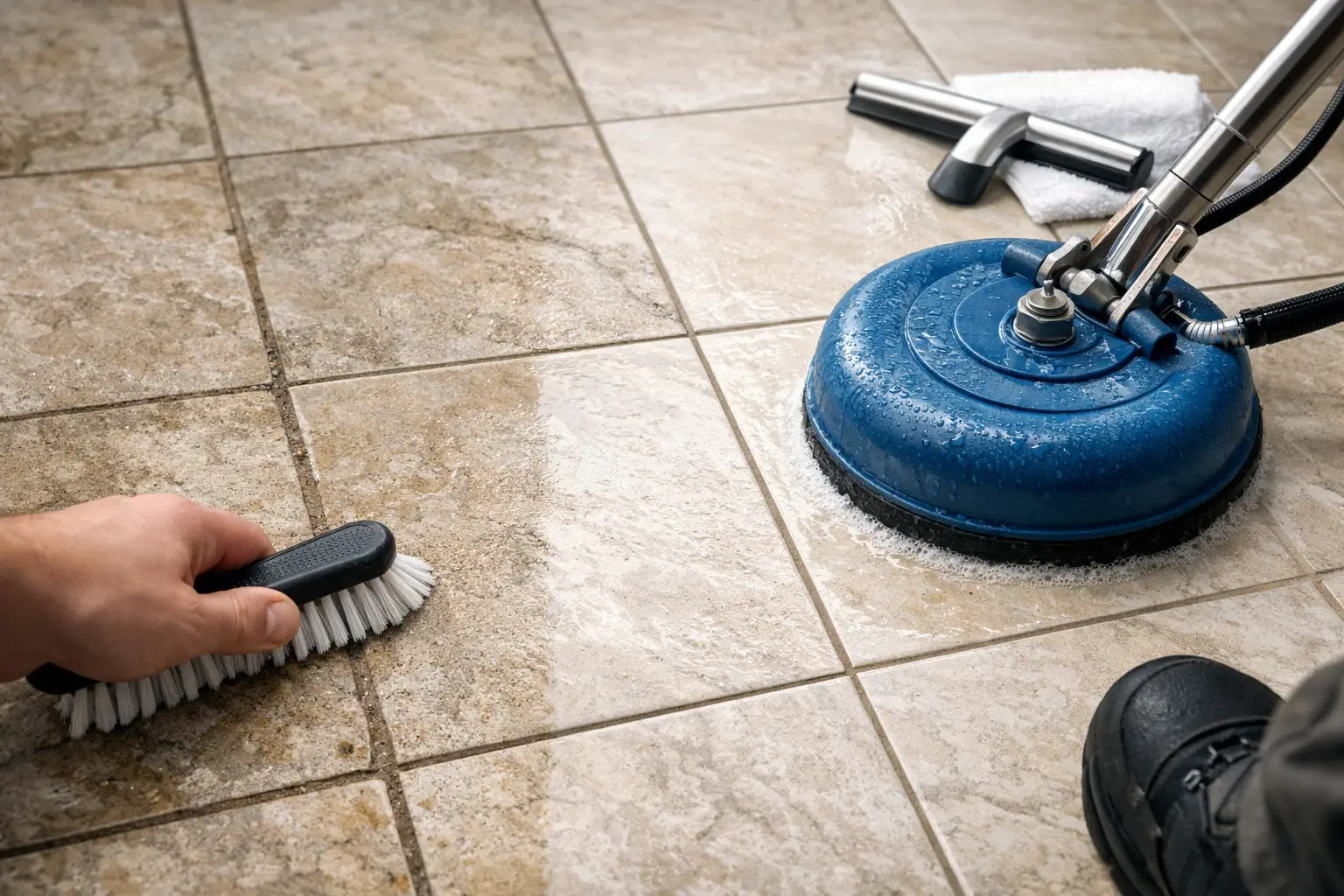
Stone Tile and Grout Cleaning That Lasts
A stone floor can look solid for years and still be holding onto layers of grime you do not fully see until the color starts to flatten, the grout lines turn dark, or the surface loses its clean finish. That is usually when stone tile and grout cleaning stops feeling cosmetic and starts feeling necessary.
In homes, rentals, offices, and hospitality spaces, stone and grout take constant abuse. Sand gets tracked in. Moisture settles into grout lines. Oils, spills, and cleaning residue build up gradually, then all at once the floor looks tired. Many property owners clean regularly and still end up with floors that never seem fully clean. That is not a sign of neglect. It usually means the floor needs a deeper process than routine mopping can provide.
Why stone floors get dirty in a different way
Stone is not the same as ceramic or porcelain, and that matters when it is time to clean it. Natural stone can be porous, sensitive to the wrong chemistry, and more likely to show etching, haze, or residue if treated carelessly. Grout adds another challenge because it tends to trap soil below the surface, especially in traffic lanes, entry areas, kitchens, bathrooms, and commercial walkways.
In West Hawaii, floors also deal with conditions that speed up buildup. Fine dust, outdoor debris, humidity, and moisture from daily living can all settle into the surface over time. Even a floor that gets frequent attention can start looking uneven because some areas hold onto contamination more aggressively than others.
That is why professional stone tile and grout cleaning is less about making the floor shiny for a day and more about removing what routine maintenance leaves behind. The real goal is restoration. Clean the surface properly, protect what can be protected, and help the floor wear more evenly going forward.
What professional stone tile and grout cleaning should actually do
A quality cleaning service should not treat every stone floor the same. Different materials respond differently, and the process should reflect that. Travertine, slate, limestone, and other stone surfaces all have their own limits. The safest and most effective approach starts with identifying the surface, the condition, and the type of buildup.
From there, the cleaning process should focus on lifting embedded soil, breaking down residue, rinsing thoroughly, and avoiding damage. Stronger chemistry is not automatically better. In fact, on stone, the wrong product can create a new problem while trying to solve the old one.
Grout deserves just as much attention as the tile itself. If the grout remains dark, sticky, or stained, the whole floor still looks dirty even when the stone improves. Deep extraction matters because loosened soil needs to be removed, not just moved around.
Professional equipment also makes a real difference. Truck-mounted systems and specialized tools can provide stronger rinsing and extraction than standard consumer equipment. That means less leftover residue, better soil removal, and a floor that stays cleaner longer.
Why mopping often makes the problem worse
A lot of floor frustration comes from good intentions. People mop more often because the floor looks dull, sticky, or streaky. But if the mop water is not changed enough, if too much product is used, or if the cleaner leaves residue, each round can add another thin layer to the problem.
That buildup acts like a dirt magnet. It catches soils faster and makes grout lines darken sooner. On some stone floors, it can also leave a cloudy finish that dulls the natural appearance of the surface.
This is one reason a floor may look cleaner while wet, then disappointing again once it dries. The surface is not truly restored. It is just temporarily masked by moisture.
Signs your floor needs more than routine cleaning
Some signs are obvious. Grout lines that stay dark no matter how much you scrub are a strong clue. So are sticky areas, dull traffic lanes, uneven color, and a floor that never seems fresh after mopping.
Other signs are easier to miss. If spills soak in quickly, the stone may have lost protection. If the floor has a patchy appearance, residue or worn sealer may be part of the issue. If bathrooms or damp areas have discoloration around grout lines, moisture-related buildup may be developing.
For property managers and business owners, timing matters. Waiting too long can turn a maintenance issue into a restoration issue. A floor that could have been deep cleaned and protected may eventually need more involved corrective work.
Stone tile and grout cleaning is not one-size-fits-all
This is where experience matters. Some floors need straightforward deep cleaning. Others need stain treatment, residue removal, or sealing after the soil is extracted. A heavily used kitchen floor may need a different approach than a guest bathroom or a hotel entry.
There are trade-offs too. Aggressive scrubbing is not always the answer, especially on softer or older stone. Fast cleaning is not always better if it leaves product behind. And sealing should not be treated like a magic fix for dirt that was never properly removed in the first place.
A good service provider will be honest about what cleaning can improve and what may require additional restoration. That matters because realistic expectations build trust. Some grout stains respond well. Some are permanent. Some stone surfaces brighten dramatically after proper cleaning. Others improve more subtly because wear, etching, or age are also part of the floor’s condition.
The value of sealing after cleaning
Not every floor needs sealing every time, but many stone and grout surfaces benefit from it after a proper cleaning. Sealer does not make a floor maintenance-free, and it does not prevent every stain. What it can do is buy you time. It helps slow down absorption so spills and soils are easier to manage before they sink in.
For grout, sealing can be especially useful because grout is often the first part of the floor to show discoloration. For stone, the right sealer depends on the material, finish, and use of the space. A high-traffic commercial area may need a different maintenance plan than a private home.
This is another place where honest guidance matters. Some floors need deep cleaning and sealing. Others may just need cleaning and better upkeep. The right recommendation should fit the floor, not a preset package.
Choosing a stone and grout cleaning company
When you bring in a professional, you are trusting them with a surface that can be expensive to replace and easy to damage with the wrong methods. That is why certification, insurance, and restoration-minded experience matter.
You want a company that understands surface differences, uses professional-grade equipment, and gives clear expectations up front. Fair pricing matters too, but so does process. If a quote sounds low because the service is rushed or oversimplified, the results may not hold.
For homes and businesses in areas like Kailua-Kona, Waikoloa, and Waimea, it also helps to work with a local company that understands how island conditions affect floors. Moisture, dust, foot traffic, and indoor-outdoor living all shape how stone and grout perform over time.
At Jensen’s Cleaning, that restoration mindset is a big part of the work. The goal is not just to make a floor look better for a weekend. It is to remove what should not be there, help protect what can be preserved, and give customers a cleaner, healthier surface they can feel good about keeping.
How to keep the results longer
After professional cleaning, maintenance gets easier, but it still matters. Use a cleaner made for your type of stone, not a harsh all-purpose product. Avoid over-wetting the floor. Change mop water often. Pick up grit before it gets ground into the surface, especially near entries and busy walkways.
If you manage a rental or commercial property, schedule matters more than most people think. It is usually more cost-effective to clean before the floor looks severely neglected. Regular professional service can help extend the life of the surface and reduce the chance of permanent staining or early replacement.
The bigger point is simple. Stone floors age better when they are maintained with the right methods at the right time. Deep cleaning is part of that plan, not a last resort.
A well-cleaned stone floor does more than improve appearance. It changes how a room feels, how a property presents, and how confidently you can maintain it from one season to the next. When the surface is properly cleaned and the grout is no longer holding onto months of buildup, the whole space feels cared for again.