Vinyl Plank Maintenance Guide for Hawaii Homes
Vinyl plank is a practical choice for West Hawaii homes, vacation rentals, and businesses because it handles everyday traffic well and offers the look of wood without the same level of upkeep. Still, “low maintenance” does not mean no maintenance. This vinyl plank maintenance guide explains how to protect the finish from grit, moisture, sunscreen residue, and cleaning-product buildup so your floors continue to look clean and well cared for.
The good news is that most vinyl floor problems begin gradually and can often be prevented with simple habits. The key is to remove abrasive soil before it is ground into the surface, clean spills promptly, and avoid products that leave a dull film behind.
Vinyl Plank Maintenance Guide: Start With Dry Soil
Sand, small stones, and dust are the biggest daily threat to vinyl plank flooring. On the Kona coast and throughout West Hawaii, outdoor debris can get tracked in quickly, especially near entrances, lanais, pool areas, and high-traffic hallways. Each bit of grit can act like fine sandpaper under shoes, chair legs, or furniture.
Sweep, dust mop, or vacuum vinyl plank regularly. For busy households, rental properties, and commercial spaces, daily dry cleaning may be appropriate. Lower-traffic rooms can usually be cleaned every few days or as needed. If using a vacuum, select a hard-floor setting and turn off a rotating beater bar, which can scuff some vinyl surfaces.
Entry mats make a real difference, but they need attention too. Use mats outside and inside frequently used doors, then shake out or vacuum them often so they continue catching debris instead of releasing it onto the floor. Choose mats without rubber, latex, or vinyl backings unless the flooring manufacturer specifically approves them. Some backings can discolor or react with vinyl over time in Hawaii’s warm conditions.
Clean Spills Before They Leave a Mark
Vinyl plank resists moisture better than many flooring options, but standing liquid still deserves prompt attention. Water can work into seams or around perimeter edges, particularly on floating floors. Spills containing cooking oil, wine, coffee, pet accidents, cosmetics, or cleaning chemicals can also leave residue that attracts more dirt.
Blot spills with a clean, absorbent cloth rather than spreading them across the floor. Follow with a lightly damp microfiber cloth if needed, then dry the area. This is especially helpful around kitchen work zones, dining tables, bathroom vanities, and doors leading to the pool or beach.
Saltwater, sunscreen, body oils, and chlorine residue are common concerns in coastal homes and vacation properties. They may not cause immediate damage, but repeated exposure can create a sticky or cloudy-looking film. Wiping these areas routinely with a vinyl-safe cleaner and drying the surface helps preserve the floor’s appearance.
Use Less Water Than You Think
A damp mop is appropriate for vinyl plank. A soaking-wet string mop is not. Excess water can seep through joints and collect at baseboards, beneath transitions, or under loose planks. Over time, that moisture can contribute to edge lifting, odors, or subfloor concerns.
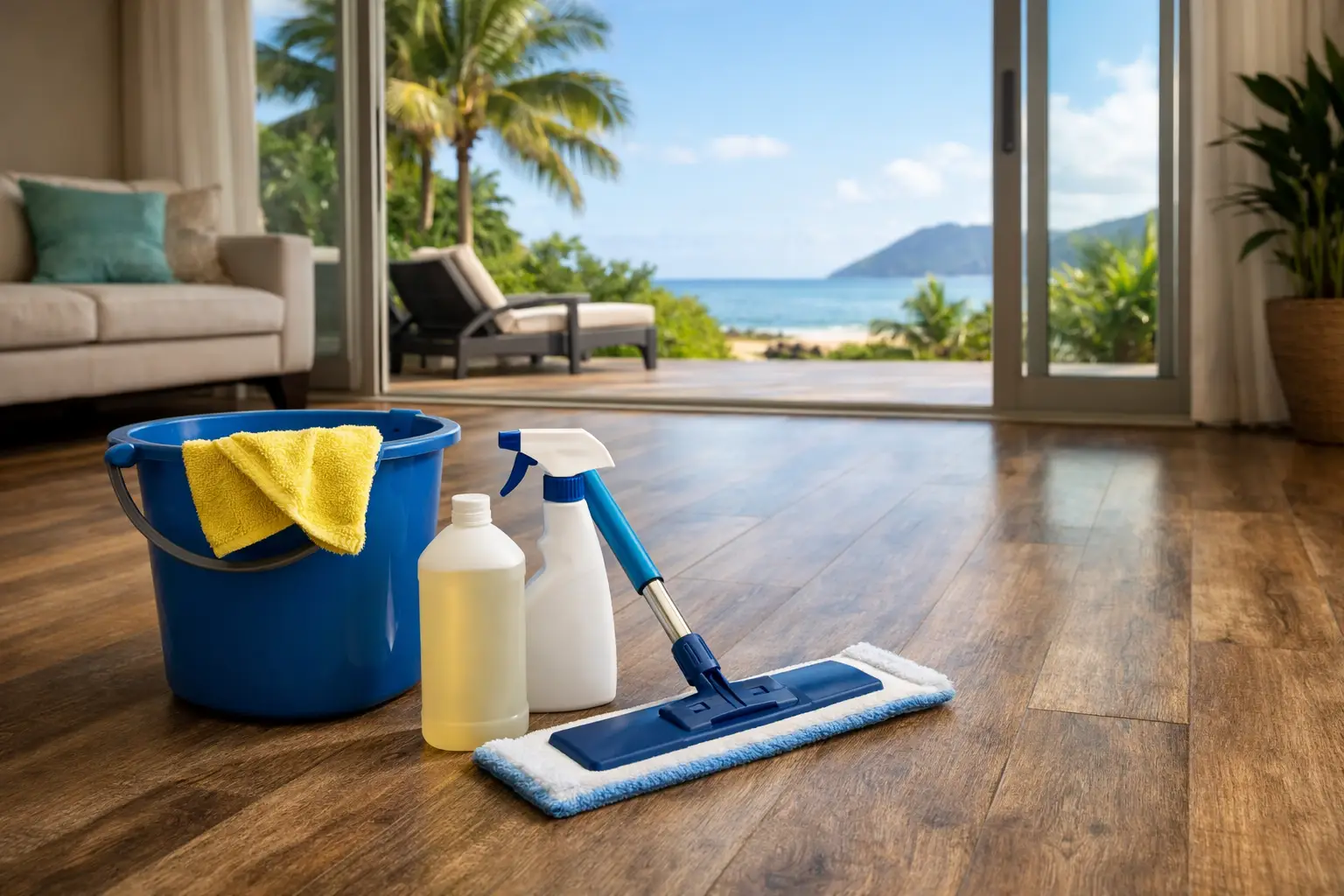
Use a microfiber mop that has been thoroughly wrung out. Work in manageable sections, changing the mop pad or rinse water when it becomes visibly dirty. The goal is to lift soil away, not move dirty water around the room. Allow the floor to dry fully before replacing rugs or moving furniture back into place.
Choose Cleaners That Will Not Leave Haze
One of the most common complaints with vinyl flooring is a dull, streaky, or hazy look that remains even after mopping. Often, the floor is not permanently damaged. It is covered with residue from too much cleaner, the wrong cleaner, or repeated use of products designed to add shine.
Use a pH-neutral cleaner labeled safe for luxury vinyl plank, vinyl composition flooring, or resilient flooring. Always follow the dilution directions. More product does not mean a cleaner floor. In fact, overconcentrated cleaner can leave a film that captures dust and makes the floor look dull faster.
Avoid waxes, floor polish, acrylic shine products, oil soaps, and harsh degreasers unless your specific flooring manufacturer has approved them. Steam mops are also a poor choice for many vinyl plank installations. High heat and moisture can stress seams, affect adhesives, or void manufacturer guidance. Bleach, ammonia, abrasive powders, and stiff scrub brushes can damage the protective wear layer or leave discoloration.
If your floor already feels tacky or looks cloudy, resist the temptation to add another layer of polish. A professional cleaning can remove stubborn buildup more safely than aggressive scrubbing or trial-and-error chemicals.
Protect High-Traffic Areas From Scratches
Vinyl plank can handle normal family and business use, but it is not scratch-proof. Dining chairs, office furniture, bar stools, pet nails, heavy appliances, and dragged furniture can all leave marks. Prevention is simpler and less costly than trying to disguise damage after it happens.
Place felt protectors under chair and table legs, and check them periodically. Felt pads collect grit, wear thin, and can become abrasive if they are not replaced. Use wide, non-staining furniture glides under heavy pieces. When moving furniture, lift it whenever possible or use furniture sliders approved for hard flooring. Never drag appliances or heavy cabinets directly across the planks.
Rolling office chairs deserve extra attention. A chair mat made for hard surfaces can protect the floor, particularly in home offices and reception areas. If a mat is not practical, choose soft casters designed for hard flooring and keep the wheels clean.
Sun exposure is another consideration in bright island homes. Vinyl plank can fade or change color unevenly when exposed to intense sunlight over long periods. Close blinds during the strongest afternoon sun, use UV-filtering window coverings where appropriate, and shift area rugs or furniture occasionally so the floor ages more evenly.
Handle Stains Carefully, Not Aggressively
Most fresh marks will lift with a vinyl-safe cleaner and a microfiber cloth. For tougher spots, start with the mildest effective method. Apply cleaner to the cloth rather than flooding the floor, gently work the affected area, and wipe dry.
Scuff marks from shoes may respond to a soft cloth and a small amount of approved cleaner. Ink, makeup, adhesive, or other difficult stains can require manufacturer-recommended spot treatment. Test any product in a hidden area first. If you do not know what kind of vinyl floor you have or which products have been used on it before, professional advice is safer than experimenting with strong solvents.
Do not use steel wool, abrasive pads, razor blades, or harsh scraping tools. They may remove the stain, but they can permanently scratch the wear layer and create a spot that catches dirt more easily afterward.
Set a Routine That Fits the Property
A realistic cleaning schedule depends on how the space is used. A quiet bedroom needs far less attention than a busy vacation rental, restaurant entrance, or family room shared by children and pets. The condition of the floor should guide the routine, not a one-size-fits-all calendar.
For most homes, regular sweeping or vacuuming and damp mopping when soil is visible will keep vinyl plank in good shape. Kitchens, entries, and pet areas often need spot cleaning between full mops. Property managers may want to inspect floors after guest turnovers, paying close attention to pool access points, entryways, and furniture legs.
Commercial spaces benefit from a written maintenance plan that accounts for traffic patterns, business hours, and cleaning staff procedures. Using the wrong product once may not ruin a floor, but repeated residue buildup can make a well-maintained space look neglected.
When Professional Vinyl Floor Cleaning Helps
Routine care protects vinyl plank, but it cannot always correct years of embedded soil, oily residue, dull traffic lanes, or product buildup. Floors can also look dirty when the issue is actually trapped grime along edges, textured surfaces, or plank seams.
Professional vinyl floor cleaning is a good option when normal mopping no longer produces a clean appearance, when the floor feels sticky after cleaning, or when there is uncertainty about previous chemicals or finishes. The right method matters. A trained cleaner can evaluate the floor type and condition, use appropriate products and controlled moisture, and focus on lifting soil without damaging the surface.
At Jensen’s Cleaning, the approach is centered on restoring the clean appearance of flooring whenever possible, rather than treating replacement as the first answer. For homes, rentals, and businesses in West Hawaii, that can help protect both the look of the property and the investment already underfoot.
A vinyl plank floor does not need complicated care. Keep abrasive soil out, clean spills without delay, use gentle products in the correct amount, and address haze or heavy buildup before it becomes the new normal. Those small, consistent choices keep the floor ready for everyday life and for the guests, customers, and family members who notice the details.