How to Clean Sofa Cushions Professionally
A sofa can look clean from across the room while its cushions hold body oils, fine dust, pet hair, food residue, and moisture below the surface. Knowing how to clean sofa cushions professionally means more than spraying a cleaner and blotting a spot. The right method protects the fabric, removes soil without leaving residue behind, and gets the cushions dry enough to prevent odor, mildew, or water marks.
For homes, vacation rentals, and hospitality spaces in West Hawaii, that last step matters. Humidity can make slow-drying cushions smell musty or create conditions where mildew becomes a concern. A professional cleaning process balances effective soil removal with controlled moisture and proper drying.
Start With the Fabric, Not the Stain
Professional upholstery cleaning begins with identification. Sofa cushions may be cotton, linen, wool, polyester, microfiber, rayon blends, leather, or delicate specialty fabrics. Two cushions that look similar can react very differently to water, heat, agitation, and cleaning solutions.
Check the manufacturer’s care tag before any cleaning begins. Most upholstered furniture is marked with a code: W means water-based cleaning is generally appropriate, S calls for solvent-based products, WS can tolerate either method, and X should only be vacuumed or professionally handled. These codes are helpful, but they are not a substitute for testing. Age, previous cleaning attempts, fading, and hidden damage can all affect the result.
A professional technician tests an inconspicuous area for color transfer, texture change, and potential browning. This small step can prevent a costly mistake, especially on natural fibers, light-colored upholstery, or fabric with a loose weave. If a cushion cover can be removed, do not assume it is machine washable. Covers often shrink, lose their shape, or become difficult to reinstall after washing.
How to Clean Sofa Cushions Professionally, Step by Step
The best method depends on the cushion fabric, the type of soil, and whether the cushion is attached, loose, or removable. Still, a sound professional process follows the same basic order: dry soil removal, targeted treatment, controlled deep cleaning, extraction, and drying.
Remove dry soil before adding moisture
Vacuuming is not a cosmetic step. It removes grit, crumbs, pet hair, skin flakes, and loose dust that can turn into muddy residue once cleaning solution is applied. Professionals use upholstery tools designed to lift debris from seams, piping, buttons, and the narrow gaps where cushions meet the frame.
Loose cushions should be vacuumed on every side, including the underside. If the foam insert is accessible, inspect the interior for crumbling foam, odor, moisture staining, or mold. Surface cleaning will not fully solve an odor coming from a contaminated insert or from the sofa frame beneath it.
Treat stains according to what caused them
Not all stains respond to the same cleaner. Protein-based spills such as milk, sweat, or pet accidents require a different approach than coffee, red wine, cooking grease, ink, or sunscreen. Applying the wrong product can set a stain, spread it, or leave a visible ring.
A professional identifies the likely source, applies a compatible spotting solution, allows proper dwell time, and gently works the product into the fibers as needed. The goal is to loosen the stain without scrubbing aggressively. Hard brushing can distort fabric texture, create fuzzing, and make one cleaned area look different from the rest of the cushion.
For a fresh spill, act quickly at home by blotting with a clean white towel. Do not rub, and do not soak the fabric. Avoid colored towels, dish soap, bleach, peroxide, and heavily fragranced household sprays unless the manufacturer specifically approves them. Those products can cause color loss, sticky residue, or damage that becomes more obvious after drying.
Use controlled moisture for deep cleaning
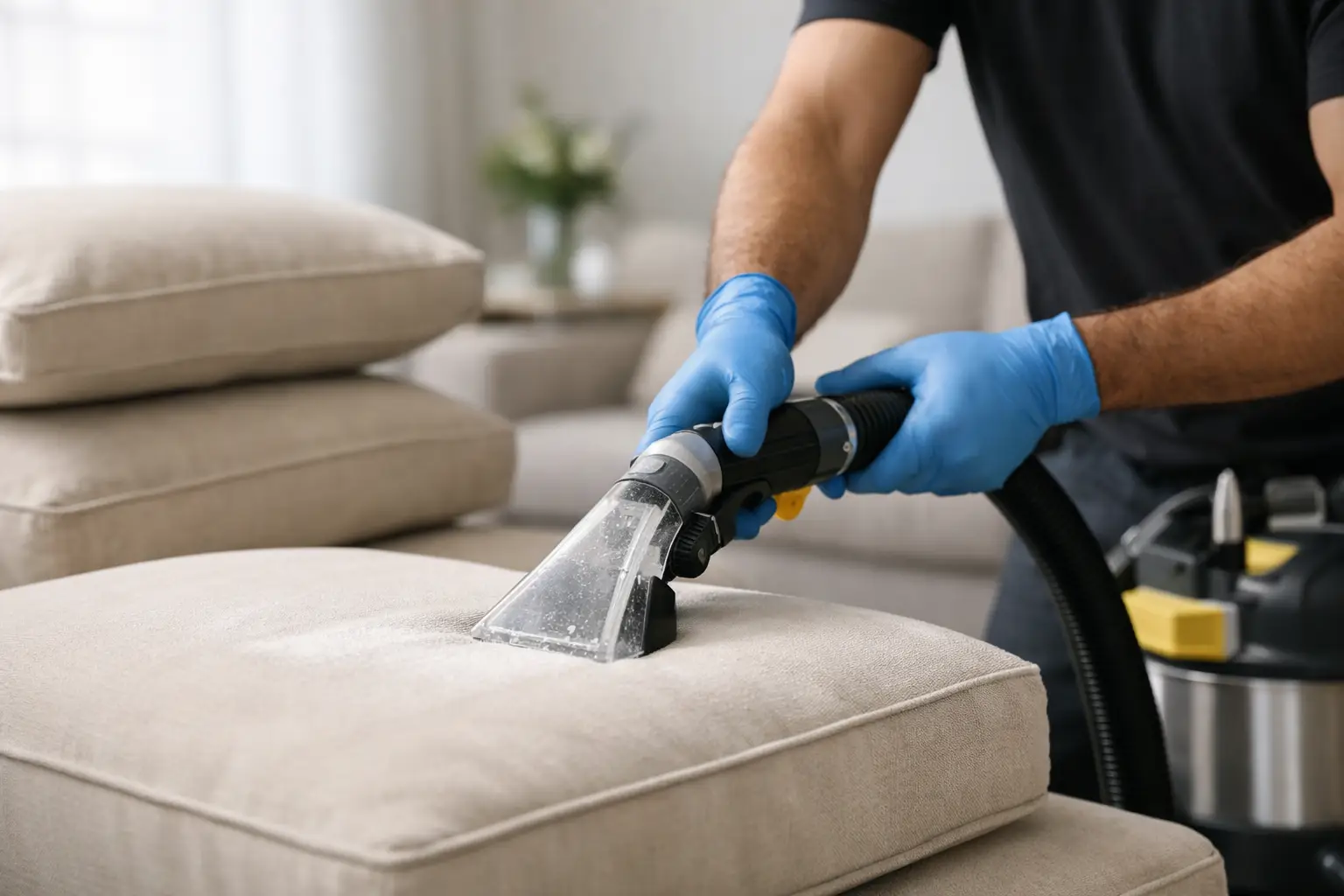
For many water-safe fabrics, hot-water extraction is an effective professional method. A specialized upholstery tool applies a measured amount of cleaning solution and rinse water, then immediately extracts suspended soil and moisture. The important word is measured. Upholstery should not be saturated.
Truck-mounted equipment can provide strong extraction, but good results are not only about power. The technician must adjust solution, temperature, pressure, and extraction technique to the fabric. Delicate cotton, linen, wool, and rayon blends may need lower moisture methods, careful hand cleaning, or specialized products rather than standard extraction.
Low-moisture cleaning may also be the better choice for cushions with unstable dyes, dense foam, delicate backing, or slow drying conditions. The trade-off is that low-moisture methods may not flush heavy contamination as thoroughly as extraction. For deeply soiled or odor-affected cushions, the best answer may be a combination of targeted treatment and careful extraction.
Extract residue, then groom the fabric
Leaving cleaner behind attracts more soil. After treatment, professional cleaning includes a thorough rinse and extraction process to remove loosened dirt and product residue. This is one reason a sofa can feel cleaner after professional service instead of becoming stiff or quickly dirty again.
The fabric is then groomed so the pile dries evenly and does not show streaks. Cushions should be reset in their proper position, with zippers and seams aligned. If covers were removed, they should be reinstalled while still slightly damp only when the fabric and manufacturer guidance allow it. This helps preserve fit, but it is not suitable for every cushion.
Drying Is Part of the Cleaning Job
A cushion that feels dry on the surface may still be damp inside. Foam and padding can retain moisture long after the fabric face looks ready to use. Professionals improve drying by using strong extraction, air movement, ventilation, and, when appropriate, drying equipment.
In a humid climate, allow extra time before closing up a room or placing cushions back against a wall. Run ceiling fans or air conditioning, keep air circulating, and avoid sitting on the sofa until it is fully dry. Most professionally cleaned upholstery dries within several hours, but fabric type, cushion thickness, soil level, and indoor humidity can extend that timeframe.
If a cushion develops a sour or musty odor after cleaning, it may have remained wet too long or may contain contamination deeper in the foam. Do not mask the odor with fragrance. The cushion may need additional drying, odor treatment, or a closer inspection of the insert and frame.
When DIY Cleaning Is Reasonable and When It Is Not
Routine vacuuming and prompt blotting are safe, useful maintenance habits. A lightly soiled synthetic cushion with a clear W or WS care code may respond well to a carefully tested upholstery product. Use minimal moisture, work in a small section, and let the area dry completely before judging the result.
Professional help is the better choice when cushions have widespread dinginess, pet urine, heavy body oils, unknown stains, water marks, mold or mildew concerns, or a persistent odor. It is also worth calling a professional for silk, wool, linen, velvet, rayon, antiques, high-value furniture, or any fabric marked S or X.
Property managers should be especially cautious with turnover cleaning. A quick surface spray can improve appearance temporarily while leaving odor and embedded soil behind. For guest-ready furniture, deep cleaning and proper drying help protect the condition of the property and the comfort of the next occupants.
Keep Cushions Cleaner Between Professional Visits
The easiest way to extend professional results is to reduce the soil that reaches the fabric. Vacuum cushions and crevices regularly, rotate reversible cushions so wear is distributed, and address spills immediately. If pets use the sofa, washable throws can protect high-use areas without hiding the furniture permanently.
Avoid placing cushions in direct sun for long periods, particularly if the fabric is natural fiber or deeply colored. Sun exposure can fade fabric and weaken fibers, while open windows may introduce salt air, dust, and moisture in coastal areas. Regular maintenance cannot stop all wear, but it can delay the need for replacement.
A clean sofa should feel comfortable, smell fresh, and look cared for without taking risks with the fabric underneath. When the material, stain, or drying conditions create uncertainty, a trained upholstery cleaner can provide the safer path to a deeper, longer-lasting result.