How to Remove Mildew From Upholstery Safely
A faint musty smell in a sofa, dining chair, or patio cushion is easy to ignore until gray, black, or green spotting appears. In West Hawaii, humidity, ocean air, closed-up vacation homes, and slow-drying spills can create the conditions mildew needs. To remove mildew from upholstery successfully, the goal is not just to lift the visible marks. You also need to stop the moisture source and clean the fabric without pushing moisture deeper into the cushion.
Start by Finding Out Why the Upholstery Stayed Damp
Mildew is a surface-level fungal growth that often develops where fabric has remained damp with limited airflow. It may show up after a leaking window, a wet swimsuit on a chair, a pet accident, a roof leak, or furniture stored in a humid room. Outdoor cushions brought inside after rain can create the same problem.
Before applying any cleaner, identify and correct the cause. A cushion cleaned while the room remains damp, a leak continues, or the furniture sits tight against a humid wall can develop mildew again quickly. Run air conditioning or a dehumidifier if available, improve ventilation, and move the furniture away from the affected area while it dries.
This step matters especially in vacant properties. A home that is closed for several weeks can trap humid air around upholstered furniture, particularly in rooms with limited circulation. Cleaning is more likely to last when the environment changes too.
Check the Fabric Before You Remove Mildew From Upholstery
Look for the manufacturer’s upholstery cleaning code, usually found under a cushion or on the furniture frame. The code helps determine how much moisture the material can safely handle.
- W means water-based cleaning methods are generally permitted.
- S means use a solvent-based upholstery cleaner only.
- WS means either water- or solvent-based products may be appropriate.
- X means vacuuming or professional cleaning only. Do not apply liquid cleaner at home.
These codes are a guide, not a guarantee. Delicate fabrics, vintage furniture, silk, rayon, wool blends, velvet, and heavily textured materials can shrink, brown, bleed color, or develop water rings when treated incorrectly. If the tag is missing, assume the fabric needs a more cautious approach.
Always test a cleaning solution on an inconspicuous area first, such as the back skirt or underside of a cushion. Let the test spot dry completely before treating the visible mildew. A solution that looks fine while wet may still leave a faded patch or a stiff residue after drying.
Remove Loose Spores Without Spreading Them Around
If possible, take removable cushions outdoors before dry cleaning them. Brush or vacuum the surface using a vacuum with a HEPA filter, working slowly to remove loose debris and surface growth. Avoid aggressively scrubbing dry mildew into the fabric. Hard brushing can drive particles into fibers and send them into the surrounding air.
Wear gloves, and consider a well-fitting mask if you are sensitive to dust, have allergies, or are dealing with more than a small spot. Keep children and pets away from the work area until the furniture is clean and fully dry.
Do not use a household fan to blow directly across visible mildew before cleaning it. Air movement is helpful during drying, but blowing untreated growth across a room can spread dust and spores to nearby surfaces.
Use the Least Aggressive Cleaning Method First
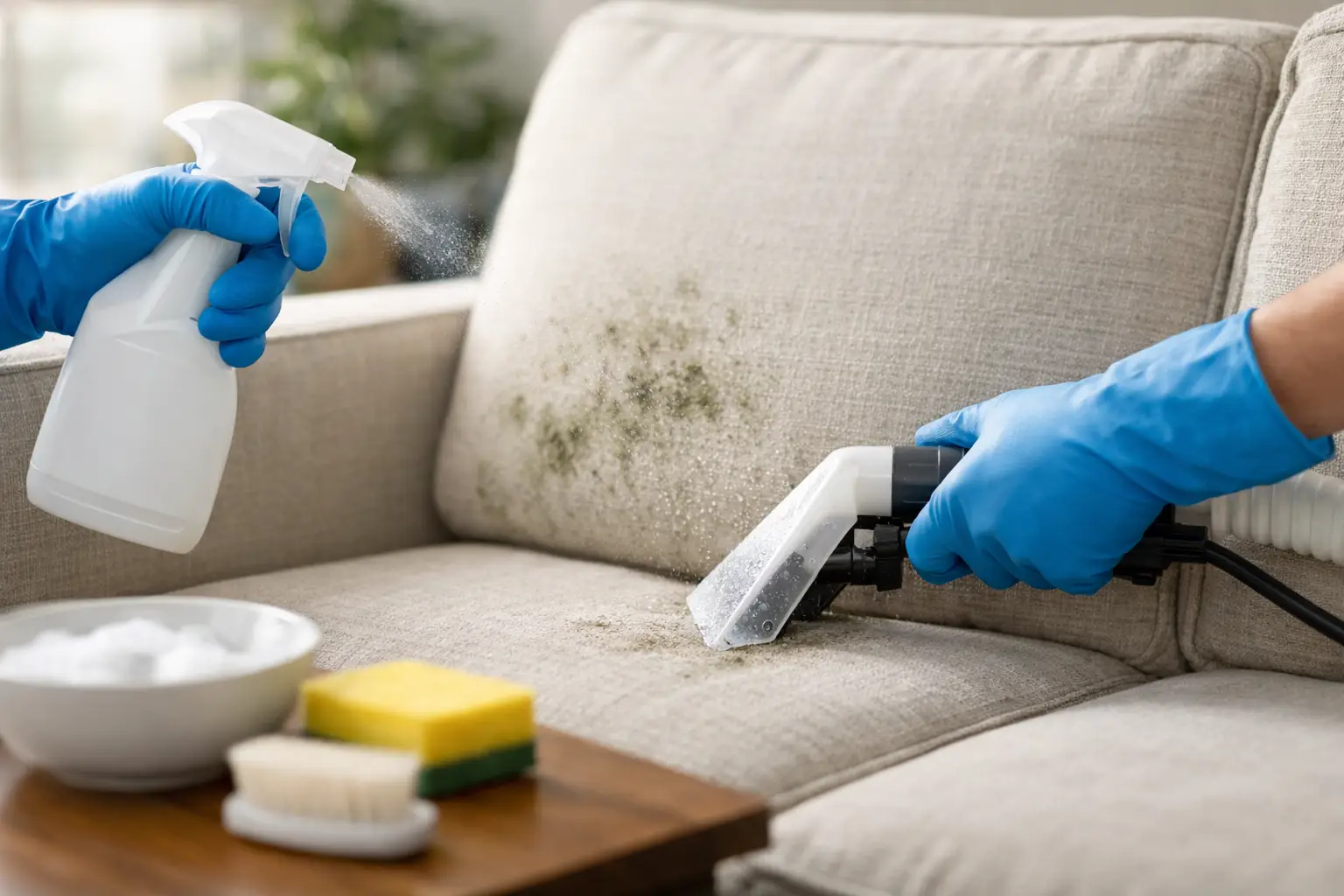
For a small mildew spot on a fabric marked W or WS, begin with a mild upholstery-safe cleaner. Apply the product to a clean white cloth rather than saturating the furniture. Blot the affected area from the outside toward the center, changing to a clean section of the cloth as soil transfers.
A diluted solution of mild dish soap and cool water can sometimes help with washable synthetic upholstery, but use very little moisture. The fabric should be lightly damp, not soaked. Follow with a second cloth lightly dampened with plain water to remove soap residue, then blot thoroughly with dry towels.
White vinegar is often suggested for mildew odor, but it is not the right answer for every fabric or stain. Its acidity can affect dyes, finishes, and delicate fibers, and the vinegar smell may linger in dense foam. Bleach is even riskier. It can discolor upholstery, weaken fibers, and create a bigger restoration problem than the mildew itself. Never mix cleaning products, especially bleach with ammonia-containing products or acids.
The safest method is usually the one that uses the correct product, the least moisture, and enough extraction to leave the fabric clean rather than merely wet.
Odor Can Remain After the Spot Is Gone
Mildew odor often lingers because the source is below the visible fabric. Upholstery has layers: face fabric, backing, padding, foam, webbing, and sometimes a wood frame. If moisture reached the cushion insert or the underside of the furniture, a surface wipe may improve the appearance without solving the odor.
After cleaning, smell the furniture again only once it is fully dry. A damp sofa naturally has a temporary wet-fabric smell, so judging it too early can be misleading. If the musty odor returns after drying, the cushion interior or frame may need professional inspection and treatment.
Dry the Furniture Quickly and Completely
Fast, complete drying is one of the most important parts of mildew removal. Blot the treated area with clean, absorbent towels and press firmly to pull out as much moisture as possible. Stand removable cushions on edge so air can reach both sides. Open windows only if the outdoor air is drier than indoors; otherwise, air conditioning or a dehumidifier may work better.
Use gentle air circulation around the furniture rather than blasting a fan directly at a still-dirty area. Depending on the fabric, cushion thickness, and room humidity, drying may take several hours or longer. Do not put cushions back in place, cover the furniture, or sit on it until it is dry to the touch throughout.
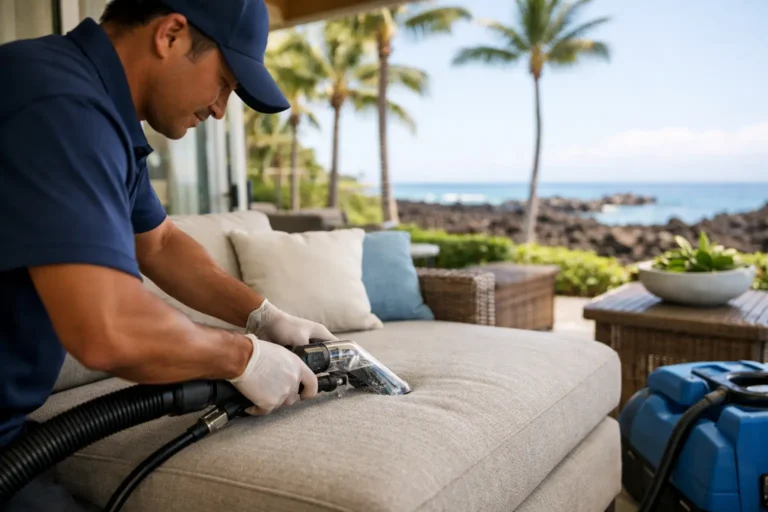
Avoid steam cleaning or renting a machine simply because mildew is present. Hot water extraction can be highly effective when performed with the right chemistry, water control, and powerful extraction. But do-it-yourself machines may leave too much moisture in upholstery foam, especially on thick sectional cushions or delicate fabrics. In a humid climate, that extra moisture can prolong drying and create the conditions mildew likes.
When Cleaning at Home Is Not Enough
A small, recent spot on washable upholstery may be manageable with careful cleaning and thorough drying. Larger or recurring growth is different. If mildew covers a broad area, has penetrated into foam, follows a water leak, or keeps returning, professional service is usually the safer choice.
The same is true for furniture with a strong musty odor, unknown fabric content, water staining, color loss, or valuable construction. A professional upholstery cleaner can assess the fabric, use appropriate cleaning agents, control moisture, and extract residue more effectively than surface spot treatment. Jensen’s Cleaning helps homeowners, property managers, and businesses in West Hawaii restore upholstered furniture with methods selected for the material and condition, not a one-size-fits-all approach.
If a leak, flooding event, or widespread mold is involved, address the moisture intrusion before scheduling cosmetic cleaning. Furniture may need to be removed from the affected space while the building issue is corrected. Cleaning cannot make a chronically damp room healthy or keep new growth from forming.
Keep Mildew From Coming Back
Once the upholstery is clean, give it a better chance to stay that way. Keep furniture a few inches away from exterior walls where condensation can collect, avoid leaving damp towels or clothing on cushions, and dry spills promptly. For vacation homes and rental properties, periodic walkthroughs can catch leaks, condensation, and closed-room odors before they become a larger cleaning project.
For outdoor furniture, bring cushions in before heavy rain when possible and store them only after they are fully dry. Breathable storage is better than sealing damp cushions in plastic bins or bags. Indoors, regular vacuuming and occasional professional upholstery cleaning help remove the body oils, dust, and residue that can hold odors and make fabric harder to refresh later.
Mildew is a signal that fabric and moisture have spent too much time together. Treat the spot carefully, dry the furniture completely, and correct the condition that caused it. That approach protects the appearance of your upholstery and helps preserve the comfort of the space around it.