How to Clean Luxury Vinyl Without Dulling It
Luxury vinyl is built to handle real life, but it still shows the effects of sandy feet, kitchen spills, pet traffic, and tracked-in moisture. Knowing how to clean luxury vinyl correctly helps preserve its protective wear layer, keeps the floor from looking cloudy, and protects the investment you made in your home, rental, or business.
Luxury vinyl plank and luxury vinyl tile are durable surfaces, not indestructible ones. The wrong cleaner, too much water, or an aggressive scrub pad can leave residue, dull the finish, or work moisture into seams. A simple, consistent cleaning routine is usually the best way to keep the floor looking fresh.
Start With the Right Cleaning Approach
Before choosing a product, identify what is actually on the floor. Loose sand and dry dirt need to be removed before mopping. A sticky spill needs prompt spot cleaning. A floor that feels tacky or looks hazy may have cleaner buildup rather than permanent damage.
This distinction matters in West Hawaii. Fine grit can act like sandpaper under shoes, especially near entryways, lanais, and high-traffic vacation rental areas. Humidity and moisture can also turn everyday soil into a film that regular sweeping alone will not remove.
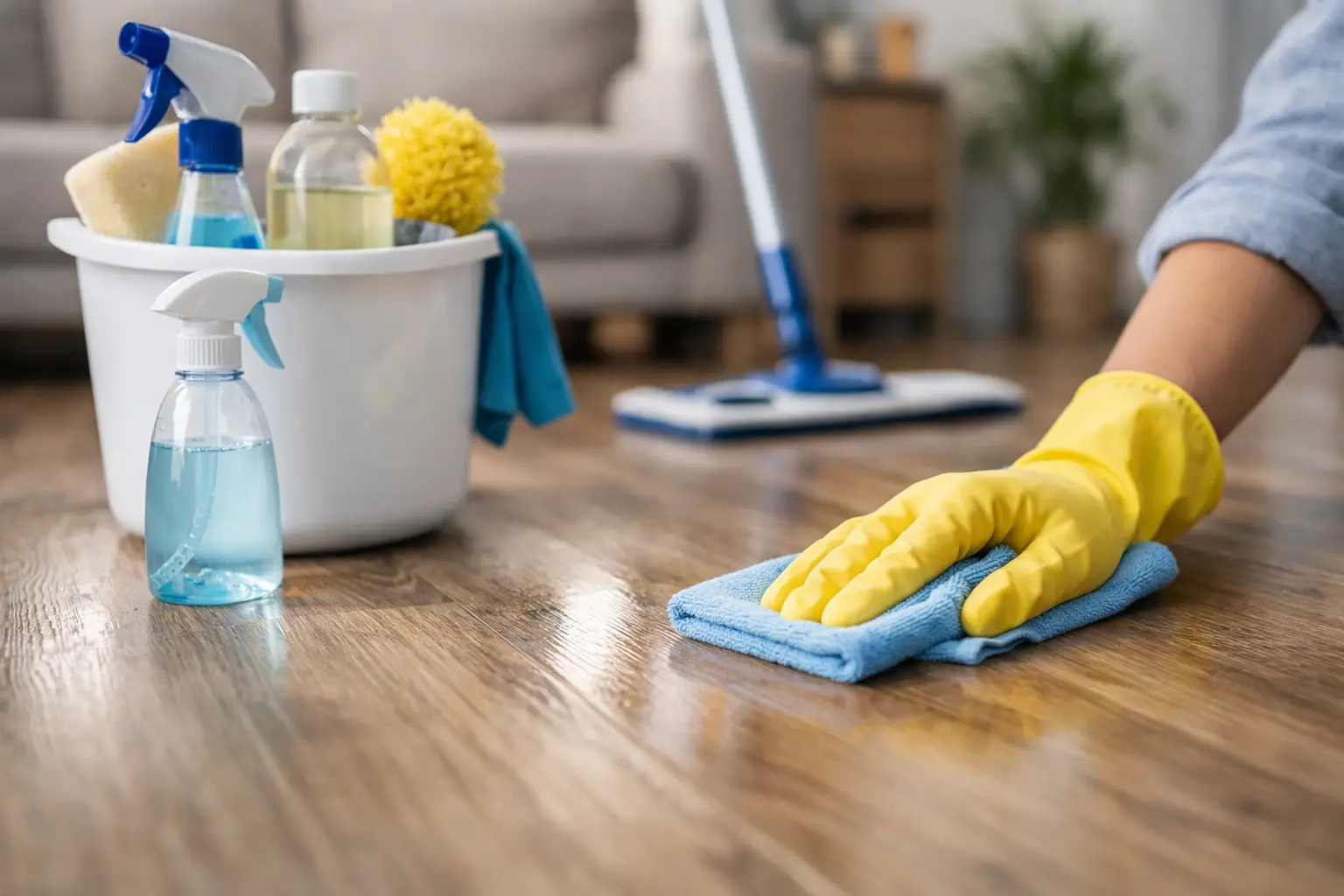
For routine care, you only need a soft broom, a vacuum with the beater bar turned off, a microfiber mop, clean water, and a pH-neutral cleaner approved for luxury vinyl. Keep a few clean microfiber cloths nearby for spills and spot treatment.
Avoid treating luxury vinyl like ceramic tile or natural stone. It does not need harsh degreasers, abrasive powders, wax, polish, or heavy-duty stripping chemicals. Those products may create shine temporarily, but they can leave a difficult residue or interfere with the floor’s factory finish.
How to Clean Luxury Vinyl Step by Step
Remove dry soil before you mop
Sweep, dust mop, or vacuum the entire floor first. Pay close attention to corners, under dining chairs, in front of exterior doors, and around kitchen cabinets. Use a hard-floor vacuum setting or turn off the rotating brush. A stiff beater bar can scratch or scuff some vinyl surfaces over time.
This step is easy to rush, but it makes a major difference. Mopping over sand and grit can drag abrasive particles across the finish. For busy homes, rental properties, and commercial spaces, dry soil removal may be needed every day or every few days.
Use a lightly damp microfiber mop
Dilute a vinyl-safe, pH-neutral floor cleaner according to its label directions. If the floor only has light everyday soil, warm water may be enough. The mop should be damp, not wet enough to leave puddles behind.
Work in manageable sections and rinse or replace the mop pad as it becomes dirty. A gray, dirty mop pad does not clean effectively – it spreads soil back across the floor. When needed, make a final pass with a separate microfiber pad lightly dampened with clean water to remove any remaining cleaner film.
Let the floor air-dry, or dry it with a clean microfiber towel in areas where water tends to sit. Do not flood the floor or allow standing water to collect along edges, transitions, or plank seams.
Clean spills right away
Blot spills with a soft cloth rather than scrubbing aggressively. For food, beverages, mud, or pet accidents, wipe the area with a damp cloth and a small amount of vinyl-safe cleaner, then wipe again with clean water if the product directions call for rinsing.
Grease near a stove or grill area can require a little more attention. Use a cleaner made for resilient flooring, applied to the cloth or mop rather than poured directly onto the floor. Give it a moment to loosen the soil, then wipe gently. Strong solvents and concentrated degreasers are not a good first choice, particularly on textured luxury vinyl.
What Not to Use on Luxury Vinyl Floors
Many cleaning problems begin with well-intended products that are too strong for the material. Skip steam mops unless the flooring manufacturer specifically allows them. High heat and pressurized moisture can affect adhesive, seams, and the structure of certain vinyl products.
Also avoid abrasive scrub pads, steel wool, scouring powders, paste wax, furniture polish, and oil-based soaps. Bleach and ammonia should not be part of routine luxury vinyl maintenance. Even when these products remove a stain, they can alter the finish, cause discoloration, or leave the floor looking uneven.
Vinegar is often recommended as a household cleaner, but it is not always the best answer for luxury vinyl. Its acidity can be unnecessary for regular cleaning, and repeated use may leave a dull appearance on certain finishes. When in doubt, follow the flooring manufacturer’s care guidance and use a neutral cleaner designed for vinyl or resilient flooring.
How Often Should You Clean Luxury Vinyl?
The right schedule depends on traffic, pets, outdoor access, and the kind of property you manage. A quiet bedroom may only need weekly sweeping and occasional damp mopping. A kitchen, entryway, office, or vacation rental may need dry cleaning several times a week and damp mopping weekly or more often.
Instead of mopping on a fixed schedule regardless of conditions, watch for signs the floor needs attention. Grit underfoot, dull traffic paths, sticky spots, and footprints that do not wipe away easily are practical signals. Cleaning before dirt becomes compacted is easier on the floor and takes less effort overall.
Entry mats make a meaningful difference, especially near doors that open to outdoor walkways, pools, or landscaped areas. Choose non-staining mats without rubber backings that could discolor the surface. Felt pads under furniture legs also help prevent scratches when chairs, stools, and tables are moved.
Removing Haze, Sticky Residue, and Scuff Marks
A floor that looks dull after cleaning may not be worn out. It may simply have layers of leftover cleaner, soap, or an incompatible product on top of the finish. Start by dry sweeping, then damp mop with clean water and a fresh microfiber pad. Change the water and pad frequently so loosened residue is removed instead of redistributed.
If the haze remains, use a manufacturer-approved vinyl floor cleaner that is intended to remove buildup. Test it first in a small, less visible spot. Never jump straight to a stripper, polish, or abrasive pad without understanding the floor’s finish and installation type.
For dark scuff marks, rub gently with a clean microfiber cloth and a small amount of approved cleaner. A soft tennis ball can sometimes lift surface scuffs, but use light pressure and test first. If the mark does not respond, it may be a scratch or wear-layer damage rather than a removable scuff.
When Professional Vinyl Floor Cleaning Makes Sense
Routine care handles most everyday dirt, but professional service can be worthwhile when floors have heavy traffic buildup, embedded grime in textured surfaces, stubborn residue, or a neglected appearance that regular mopping has not improved. This is common in vacation rentals, retail areas, restaurants, and homes with frequent outdoor traffic.
A professional should evaluate the vinyl type, its wear condition, the cleaning products previously used, and whether the issue is surface soil or actual damage. The goal is not to use the strongest possible chemical. It is to safely remove buildup and restore a clean, even appearance without creating a new problem.
For property owners in Kailua-Kona and across West Hawaii, Jensen’s Cleaning provides professional vinyl floor cleaning with the same restoration-focused care used for other hard surfaces. Fair assessment matters, because some floors need a deep clean while others may need repair or replacement rather than more aggressive cleaning.
A clean luxury vinyl floor should feel smooth underfoot, look even in natural light, and never stay sticky after it dries. Keep the routine simple, use products made for the surface, and address buildup before it becomes a bigger job. That steady care protects both the appearance of the floor and the comfort of the space around it.