Hotel Carpet Restoration That Protects Guest Experience
A guest may never mention a stained corridor or a musty room carpet at checkout, but they notice it. Carpet is one of the largest visual surfaces in a hotel, and it quietly shapes a guest’s impression of cleanliness, comfort, and value. Professional hotel carpet restoration addresses more than surface spots. It removes embedded soil, manages odors, improves appearance, and can help a property get more service life from an expensive flooring asset.
For hotels, vacation rentals, resorts, and managed lodging properties in West Hawaii, carpet takes a unique beating. Fine sand travels in from beaches and walkways, humidity can intensify odors, sunscreen and oils leave residue, and rolling luggage creates dark traffic lanes fast. Waiting until carpet looks worn can make restoration more difficult and replacement more likely.
What Hotel Carpet Restoration Actually Means
Restoration is not simply a quick pass with a carpet machine. It is a planned process that evaluates the carpet’s condition, fiber type, construction, staining, odor concerns, and traffic patterns before the cleaning method is selected.
A qualified technician starts by identifying what is causing the carpet to look dull or dirty. In many cases, the gray or black areas near doorways, elevators, beds, and hallways are not permanent wear. They are compacted soil, oils, and residues that have bonded to the fibers. With the proper cleaning chemistry, agitation, hot-water extraction, and drying practices, much of that buildup can be removed without harming the carpet.
The goal is to restore a cleaner, more even appearance while protecting the backing, fibers, and adhesive beneath. That distinction matters. Aggressive products, excessive moisture, or poor drying can leave residue, cause wicking, or create conditions that make odor problems worse.
Why Hotel Carpets Need More Than Routine Vacuuming
Vacuuming is essential, especially in entryways and guest corridors, but it only removes dry debris near the surface. It cannot fully remove oily soil, tracked-in grime, beverage spills, body oils, food residue, or the fine grit that settles deep in the pile.
That fine grit is especially damaging because it acts like sandpaper under foot traffic. As guests and staff walk across the carpet, particles rub against the fibers and gradually make them look frayed, flattened, and dull. Regular deep cleaning removes this abrasive material before it can cause more permanent wear.
Hotels also face a presentation issue that homes do not always share. A small stain in a guest room can lead to a room change, a complaint, or a negative review. In a lobby or hallway, visible traffic lanes can make an otherwise well-maintained property feel neglected. Carpet restoration supports housekeeping teams by addressing the deeper cleaning needs that daily turnover routines cannot solve alone.
Signs It Is Time to Schedule Hotel Carpet Restoration
The right schedule depends on occupancy, guest behavior, carpet color, the building’s layout, and how consistently the property is vacuumed. A busy oceanfront property may need attention far more often than a small lodging property with limited foot traffic.
Watch for persistent dark lanes, sticky or crunchy areas, recurring spots, dullness that does not improve after vacuuming, and odors that return when the carpet gets humid. Other signs include visible sand buildup near entrances, stains around beds and seating areas, and carpet that takes on a matted appearance in walkways.
Do not wait for every room to look heavily soiled. Treating high-traffic zones early is usually more cost-effective than trying to recover carpet after the soil has become deeply compacted. A maintenance plan can also allow cleaning to be completed in phases, reducing disruption to guests and room availability.
The Restoration Process That Protects Carpet and Guest Rooms
A dependable restoration service should begin with an inspection rather than a one-size-fits-all approach. Carpet fibers respond differently to cleaning, and stain removal depends on knowing what caused the spot. Coffee, wine, makeup, rust, pet accidents, sunscreen, and food spills each call for different treatment methods.
Inspection and targeted pre-treatment
Technicians assess traffic patterns, stains, carpet condition, and moisture concerns. Heavily soiled areas receive appropriate pre-treatment to loosen oils and embedded grime before extraction. This step is where experience matters: using the wrong product can set a stain, alter color, or leave a residue that attracts new soil.
Agitation and deep extraction
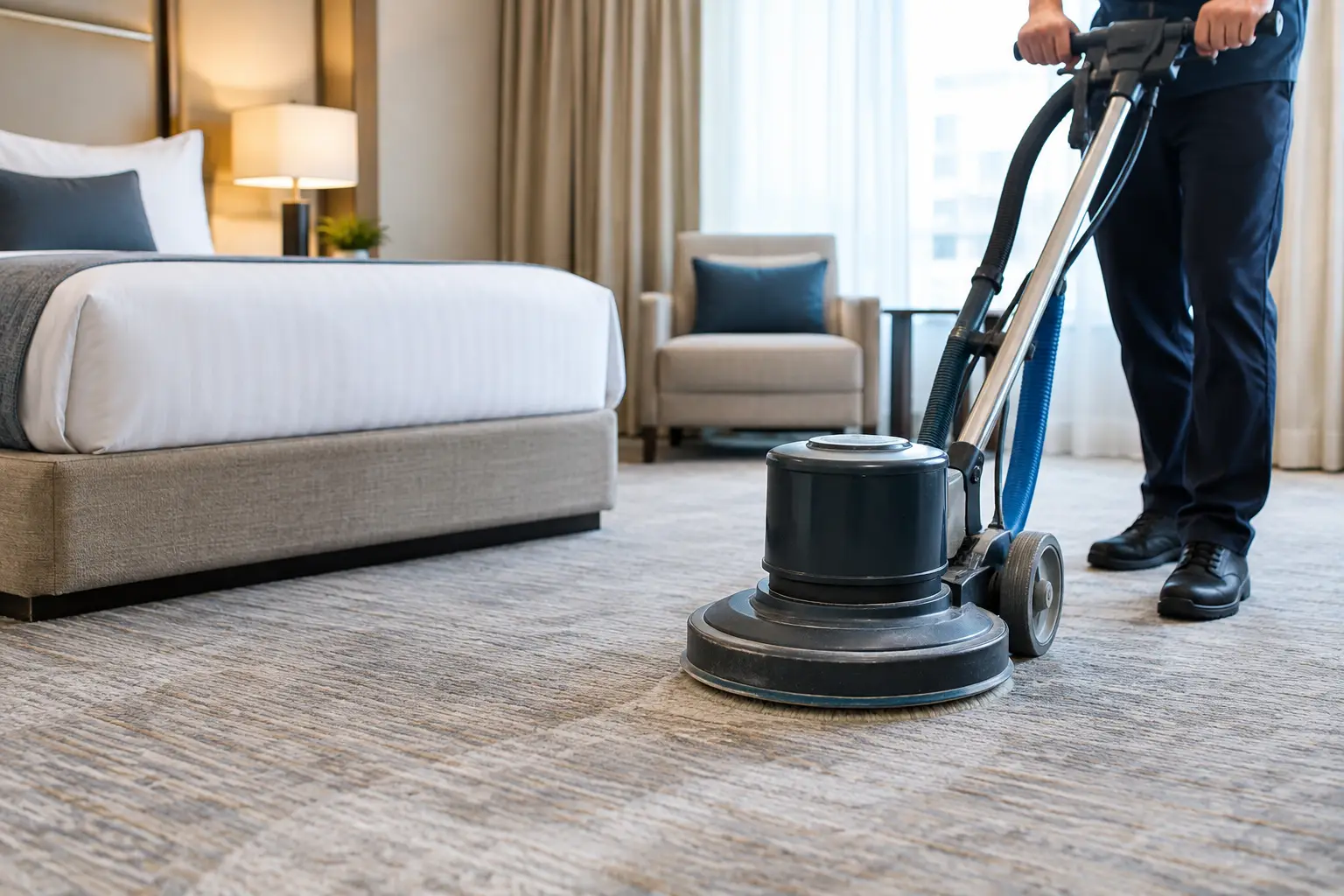
For many commercial carpet situations, professional hot-water extraction is an effective restoration method. Truck-mounted equipment can provide strong soil removal and recovery, helping lift contaminants out of the carpet rather than merely moving them around.
Agitation may be used to work cleaning solutions into dense traffic lanes, while extraction removes loosened soil and moisture. The exact approach should be adjusted for the carpet’s condition, construction, and the property’s operating schedule.
Spot treatment, odor management, and drying
Some stains require individual attention after the main cleaning process. Odor treatment also needs to address the source, not cover it with fragrance. If a spill or biological accident has reached the backing or pad, surface cleaning alone may not be enough.
Proper drying is part of the job, not an afterthought. Good air movement, controlled moisture, and appropriate extraction help carpets dry efficiently. This is particularly important in Hawaii’s humid conditions, where lingering moisture can create inconvenience for guests and increase the risk of odor concerns.
When Restoration Can Save Carpet – and When Replacement Makes Sense
Carpet restoration can often produce a significant improvement, even when a floor looks tired at first glance. Traffic lanes, food stains, general dinginess, and many odor issues can respond well when they are treated promptly and correctly. Restoring existing carpet may also reduce downtime and help a property delay a major replacement expense.
Still, not every carpet can be restored to a like-new condition. Replacement may be the better choice when fibers are permanently worn away, seams are separating, backing is failing, there is extensive water damage, or staining has caused irreversible color loss. Bleach spots, burns, severe mold contamination, and long-term delamination are examples where cleaning alone has limits.
An honest assessment should explain those limits clearly. The right provider will not promise that every mark will disappear. They should explain what can reasonably improve, identify risks, and recommend the most practical next step for the property.
Build a Maintenance Plan Around Real Hotel Traffic
The best results come from combining routine care with periodic professional restoration. Daily vacuuming should focus on lobbies, entrances, hallways, elevator areas, and other high-traffic spaces. Immediate spill response is equally valuable, since fresh spills are much easier to treat than stains that have dried and been walked on repeatedly.
For many properties, guest-room carpets can be cleaned on a rotating schedule, while corridors and public areas receive more frequent attention. Seasonal occupancy also matters. Scheduling deep cleaning before a busy travel period can help rooms and common spaces make their strongest first impression.
A practical plan should account for room turnover, maintenance windows, and drying time. Cleaning every area at once is not always necessary or efficient. A phased approach lets managers prioritize the spaces guests see most while keeping operations moving.
Choosing a Carpet Restoration Partner for Your Property
Hotels need more than a cleaning vendor who can fit them into a calendar. They need a service partner who understands commercial traffic, guest expectations, delicate materials, stain chemistry, and the value of minimizing disruption.
Ask whether the company is insured, how it handles spotting and odor issues, what equipment it uses, and how it manages drying. Clear pricing and a willingness to inspect the carpet before making broad promises are also good signs. For properties in Kailua-Kona and across West Hawaii, Jensen’s Cleaning brings a restoration-oriented approach, professional equipment, and the straightforward service property managers need.
The most useful carpet service is one that helps a hotel prevent avoidable replacement, protect its rooms, and keep guests comfortable without creating extra work for the staff. When carpet begins to show its age, timely restoration can make the difference between a surface that looks neglected and one that still welcomes every guest through the door.