
Why Does Grout Darken? Causes and Lasting Fixes
A tile floor can look clean at first glance, then the darker lines between the tiles tell a different story. If you are asking, why does grout darken, the answer is usually not one dramatic stain. Grout gradually collects soil, moisture, oils, and cleaning residue in its tiny pores until it no longer matches its original color.
This happens in bathrooms, kitchens, entryways, lanais, and commercial spaces alike. In West Hawaii, sand, humidity, wet feet, and everyday traffic can speed up the process. The good news is that dark grout does not automatically mean your tile needs to be replaced. In many cases, the right cleaning and restoration approach can make a major difference.
Why Does Grout Darken Over Time?
Most grout is cement-based, which means it is naturally porous unless it has been properly sealed and maintained. Those pores act like very small pockets that hold onto whatever reaches the floor: dust, soil, soap, body oils, cooking grease, spilled drinks, and moisture.
A light-colored grout line shows this buildup quickly, but darker grout is not immune. It simply hides the early stages better. Once the surface has absorbed enough residue, the grout may look gray, brown, yellowed, or nearly black in high-use areas.
Foot Traffic Pushes Soil Into the Pores
Hallways, kitchens, bathrooms, entryways, and the paths between living areas often darken first. Shoes bring in fine dirt and sand. Bare feet leave behind skin oils, sunscreen, lotion, and moisture. Mops can move loose soil across the tile but may not pull embedded grime out of grout lines.
This is why a floor may appear freshly mopped while the grout still looks dingy. Surface cleaning and deep grout cleaning are different jobs. The tile has a smooth, nonporous finish, while grout has texture and absorbency that trap contamination below the surface.
Moisture Can Lead to Mold and Mildew Staining
Bathrooms, shower surrounds, laundry rooms, and shaded outdoor areas are especially vulnerable to moisture-related discoloration. Mold and mildew can develop where grout stays damp, particularly if ventilation is limited or water is allowed to sit along tile joints.
Mildew may look black, gray, greenish, or brown. Not every dark grout line is mold, however. Dirt, mineral deposits, and deteriorating sealer can create a similar appearance. Identifying the source matters because cleaning methods that work on regular soil may not fully address moisture-related growth.
In showers, recurring dark spots can also point to a maintenance issue beyond cleaning. Cracked grout, missing caulk, inadequate ventilation, or water getting behind the tile may need attention to prevent the problem from returning.
Soap, Cleaner, and Grease Residue Attract More Dirt
More cleaning is not always better if the product leaves a film behind. Soap-based cleaners, some all-purpose floor products, and excessive detergent can leave residue on tile and grout. That residue becomes slightly tacky and attracts more dirt, making the grout look darker again soon after mopping.
Kitchen grout has its own challenge: airborne cooking oils and grease settle on the floor over time. Even small amounts can bind dust to the grout surface. In vacation rentals, restaurants, and busy homes, this buildup can happen faster than expected.
Using too much cleaner can be just as frustrating as using the wrong one. A product that is not fully rinsed may leave the floor looking dull and make future maintenance harder.
Minerals, Hard Water, and Outdoor Conditions Can Change the Color
Water can leave behind minerals as it dries. On bathroom floors, near exterior doors, around pool areas, and in wet lanais, mineral deposits may create a chalky, yellowish, or darker appearance. Salt air, windblown dust, and volcanic soil can also add to the challenge for Hawaii properties.
These conditions do not affect every tile installation the same way. The type of grout, whether it was sealed, the amount of foot traffic, and how often the area gets wet all play a role. That is why two rooms in the same home may age very differently.
Dark Grout Is Not Always Just Dirt
Before treating grout aggressively, it helps to recognize that color changes can have several causes. Some grout darkens because it is wet and lightens as it dries. If the grout stays darker in certain spots even after adequate drying time, moisture may be lingering beneath or within the surface.
Grout can also look uneven if the original installation had inconsistent mixing, curing, or sealing. Acidic cleaners, bleach used too often, and abrasive scrubbing can wear away the grout surface. As the surface becomes rougher or damaged, it holds more soil and may appear darker.
In older floors, grout may have lost its original color through years of use. Deep cleaning can remove accumulated buildup, but it cannot always reverse permanent discoloration, staining, or damage. When that happens, color sealing or grout repair may be a more practical option than repeated harsh cleaning.
How to Clean Darkened Grout Safely
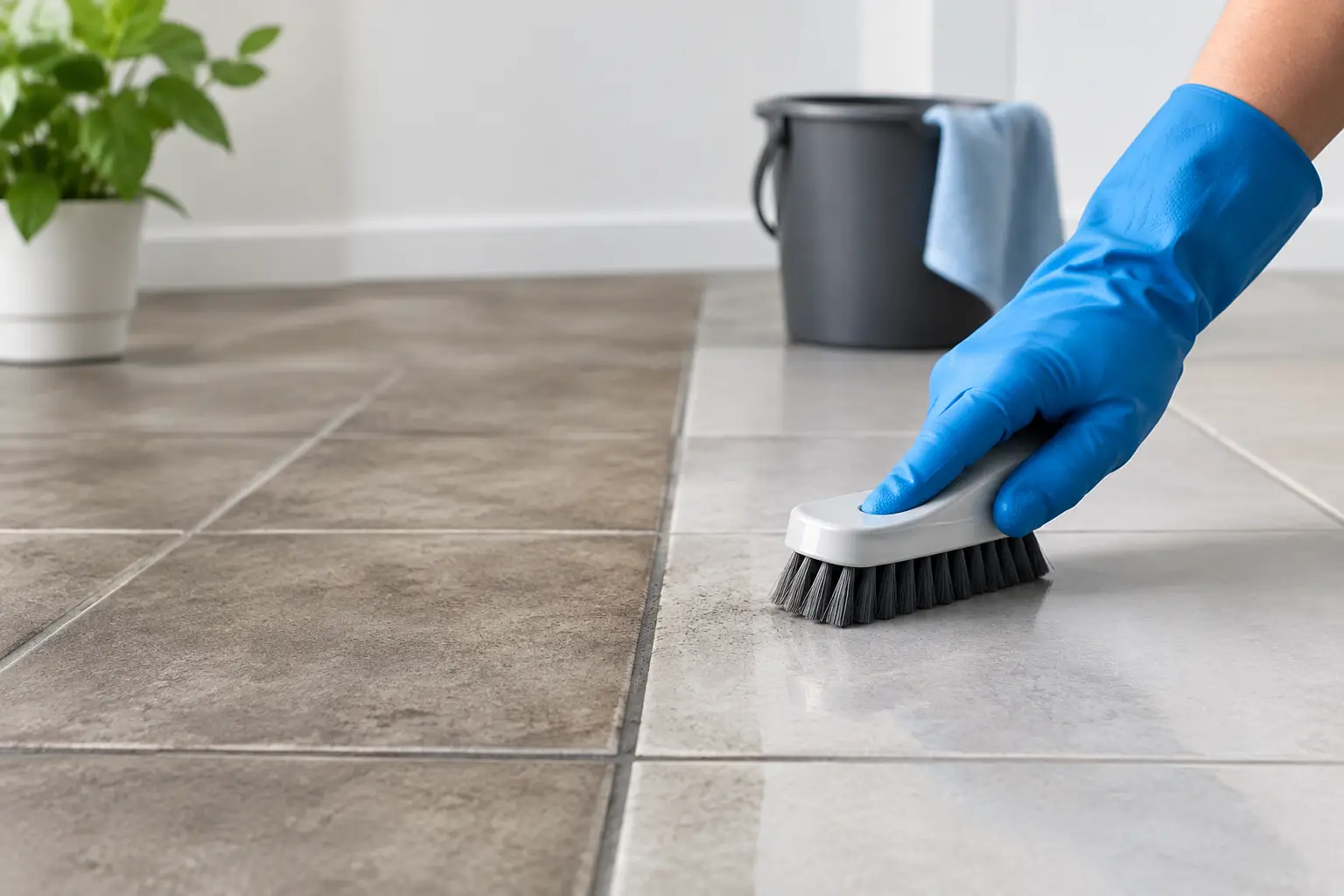
For light, routine buildup, start with the gentlest effective method. Vacuum or sweep first so loose grit does not scratch the tile. Then use a cleaner made for tile and grout, following the label directions and allowing appropriate dwell time before scrubbing with a soft grout brush.
Work in small sections and rinse thoroughly with clean water. The rinsing step matters. If loosened soil and cleaner are left behind, they can settle back into the grout lines.
Avoid reaching immediately for strong acids, wire brushes, or repeated bleach treatments. Acidic products can etch or weaken cement-based grout and may damage certain natural stone tiles. Wire brushes can gouge the grout surface. Bleach may brighten some stains temporarily, but frequent use can degrade grout and does not remove every type of embedded soil.
Steam cleaning can help in some situations, but it is not a universal answer. Excessive heat or moisture may be a concern around loose tile, failing grout, natural stone, or areas with existing water intrusion. When in doubt, test a small inconspicuous area first.
When Professional Tile and Grout Cleaning Makes Sense
Professional cleaning is often the better choice when grout remains dark after normal cleaning, when large areas need attention, or when a property needs dependable results before guests, tenants, or customers arrive. A trained technician can evaluate the tile, grout condition, staining source, and appropriate products instead of applying one harsh method to every floor.
Professional-grade equipment uses controlled cleaning solutions, agitation, and extraction to lift embedded soil from grout lines. The goal is not simply to make the floor look brighter for a day. It is to remove the buildup that routine mopping leaves behind while protecting the surrounding tile.
This can be especially helpful for kitchens, high-traffic commercial floors, vacation rentals, shower areas, and older tile installations. At Jensen’s Cleaning, the focus is on restoration-minded care: improving the appearance and cleanliness of the surface whenever possible before suggesting more costly replacement.
There are limits, and an honest assessment matters. If grout is cracked, crumbling, deeply stained by dyes or rust, or affected by an ongoing moisture issue, cleaning alone may not provide a permanent solution. Repairs, resealing, color sealing, or moisture correction may be needed first.
Keeping Grout From Darkening Again
Once grout is cleaned, a few consistent habits can help protect the result. Place mats at exterior doors to reduce sand and soil, especially in high-traffic entrances. Wipe spills promptly, and avoid letting water stand on bathroom or kitchen floors. In showers, improve airflow by using the exhaust fan and leaving the door open after use when possible.
Use the right amount of a neutral tile cleaner rather than overusing soap-heavy products. Clean mop heads regularly, because a dirty mop can spread grime across the floor instead of removing it. For grout that is in good condition, a quality penetrating sealer can reduce absorption and make future cleanup easier.
Sealer is helpful, but it is not permanent armor. It wears down with foot traffic, cleaning products, and time. High-use areas may need periodic resealing, while a low-traffic guest bathroom may hold up much longer.
Dark grout is often a sign that your floor needs a deeper level of care, not that the tile has reached the end of its life. Addressing it early can protect the appearance of your home or business, make routine cleaning easier, and help your tile surfaces continue to serve you well.