Area Rug Care for Humid Homes That Works
A beautiful area rug can change the feel of a room, but in West Hawaii, warmth and moisture can make that same rug hold odors, feel damp, or develop mildew faster than many homeowners expect. Effective area rug care for humid homes is less about cleaning constantly and more about managing moisture before it settles into the fibers, backing, and flooring underneath.
Humidity is part of life in Kailua-Kona, Keauhou, Holualoa, and many coastal or upland communities. Open windows, ocean air, rainy-season weather, wet feet, pets, and vacation-rental turnover can all add moisture to a rug. With the right routine, you can protect its appearance, improve indoor freshness, and help it last longer.
Why Humidity Is Hard on Area Rugs
Rugs naturally collect dust, skin cells, sand, pet hair, and oils from daily foot traffic. In dry conditions, much of that debris remains loose until vacuuming or professional cleaning removes it. In a humid home, moisture can bind those soils to the fibers and create an environment where odors and microbial growth are more likely.
The rug’s backing is often the hidden concern. Cotton, jute, wool, and some natural-fiber backings can absorb moisture and dry slowly, especially when a rug sits directly on a cool floor or in a room with limited airflow. Even synthetic rugs can trap moisture beneath them. That can affect the rug, the pad, and in some cases the floor below.
Humidity does not automatically mean mold or mildew. However, a persistent musty smell, dark spotting, tacky backing, or a rug that feels damp days after cleaning deserves attention. Waiting for the problem to become visible usually makes restoration more difficult.
Area Rug Care for Humid Homes Starts With Airflow
The most useful daily protection is simple: keep air moving around and under the rug. Use air conditioning, ceiling fans, portable fans, or a dehumidifier in rooms that stay closed up or feel consistently clammy. This matters most in bedrooms, ground-level rooms, lanais that are partially enclosed, and vacation properties that may sit vacant between guests.
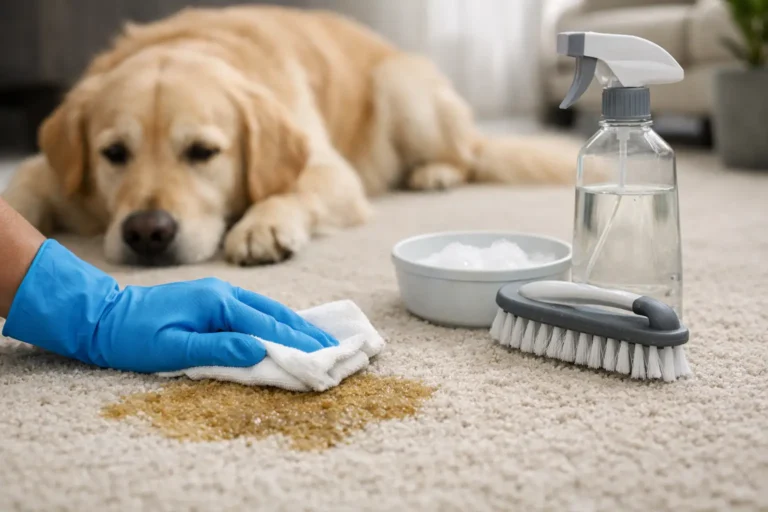
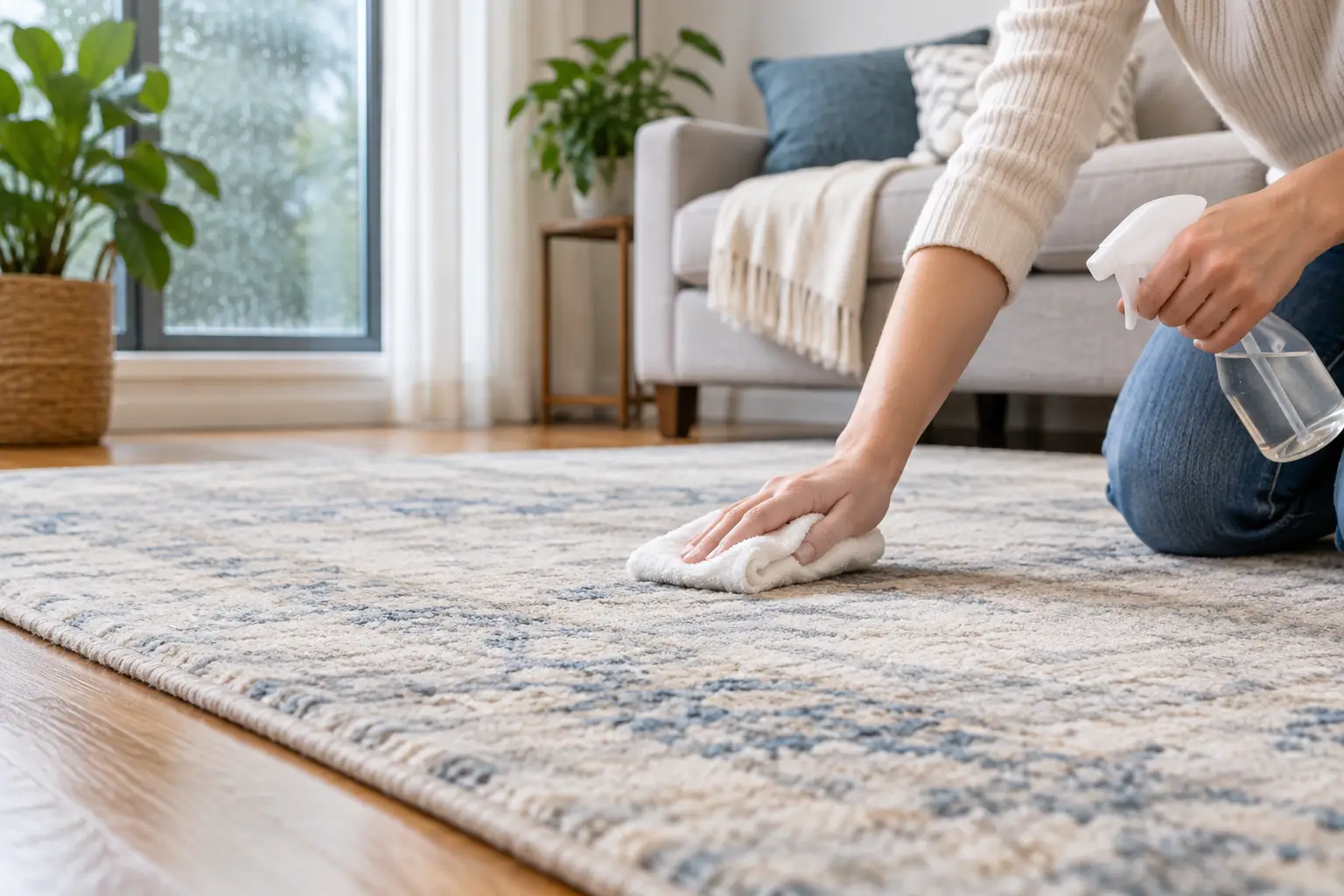
If a rug gets wet from a spill, a leaking window, wet shoes, or a pet accident, blot it immediately with clean, absorbent towels. Press down firmly rather than scrubbing, which can push liquid deeper into the pile and spread the affected area. Then help both sides dry. Lift a corner to check the backing and the floor beneath, and direct airflow across the rug.
A small surface spill may dry quickly. A larger saturation, especially on a thick wool rug or one with a dense pad, may require professional help. The goal is not just to dry what you can see. It is to remove moisture from the backing and foundation before odor or mildew takes hold.
Do Not Leave Rugs Outdoors to “Air Out” All Day
Sunlight can help with brief drying, but outdoor humidity, sudden rain, salt air, and direct UV exposure can create new problems. Prolonged sun can fade colors and weaken natural fibers. If you take a rug outside after a minor incident, choose a dry period, avoid harsh midday sun, and bring it in as soon as it is fully dry.
For valuable, antique, hand-knotted, silk, wool, viscose, or specialty rugs, avoid home experiments. These materials can bleed, brown, shrink, or become distorted when cleaned and dried incorrectly.
Vacuum Often, but Use the Right Setting
Fine sand and volcanic dust can work their way into a rug like sandpaper. In humid conditions, that grit combines with oils and can make fibers look dull or matted. Regular vacuuming removes dry soil before moisture helps it settle deeper.
For most household rugs, vacuum once or twice a week and more often in entryways, living rooms, and rental properties. Vacuum slowly enough for the machine to lift embedded debris. Rotate the rug every few months so traffic patterns and sun exposure are distributed more evenly.
Be cautious with fringes, loose weaves, and delicate fibers. A beater bar can pull threads, damage fringe, or rough up a low-pile wool rug. Use a suction-only setting or an upholstery attachment when the rug’s construction calls for gentler care.
Choose a Rug Pad That Does Not Trap Moisture
A rug pad adds comfort, reduces slipping, and protects the floor, but the wrong pad can trap moisture underneath the rug. Avoid solid, non-breathable pads in rooms prone to humidity or dampness. Look for a pad designed to allow airflow while remaining compatible with your specific floor type.
This is especially important over hardwood, luxury vinyl, laminate, or stone. Moisture held between the rug, pad, and floor can contribute to discoloration, finish damage, or residue buildup. Every few months, lift the rug and pad to inspect both sides. You are checking for dampness, odor, staining, curling, or a powdery residue.
If the pad smells musty or feels brittle, sticky, or permanently damp, replacing it is often the better choice. Cleaning the rug without addressing a compromised pad can leave the source of the odor behind.
Be Careful With DIY Spot Cleaners
A quick spray from the grocery store can seem like the easiest answer after a spill. The trade-off is that many spot cleaners leave detergent behind, and detergent residue attracts new soil. In humid homes, that residue may also make a rug feel stiff or tacky and slow the drying process.
For a fresh, water-based spill, blot first. Use only a small amount of an appropriate cleaning solution after testing it in an inconspicuous area. Avoid soaking the rug, and do not mix household chemicals. Bleach, high-alkaline products, and heavily fragranced cleaners can damage fibers or mask an odor without solving the cause.
Pet urine, food spills, red wine, coffee, and oily stains each behave differently. The best treatment depends on the fiber type, dye stability, age of the stain, and how far the spill reached into the backing. When in doubt, professional cleaning is safer than repeated applications of the wrong product.
Know When a Rug Needs Professional Cleaning
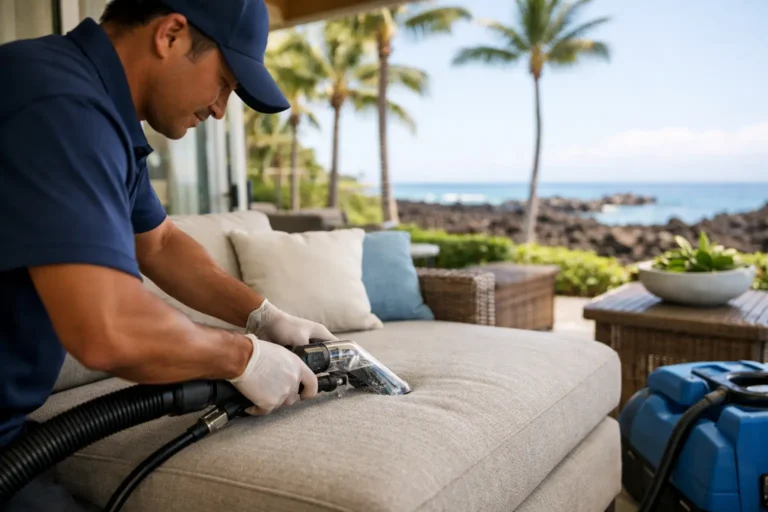
Vacuuming and prompt spill response are essential, but they cannot remove all embedded soil, oils, allergens, and residues. Most rugs benefit from professional cleaning on a regular schedule, often every 12 to 18 months. Homes with pets, children, high traffic, oceanfront exposure, or frequent guests may need more frequent service.
A professional assessment is particularly worthwhile when a rug has a musty odor, recurring spots, pet contamination, visible mildew, water exposure, or overall graying that does not improve with vacuuming. Proper cleaning should account for the rug’s fibers, dyes, construction, backing, and condition. Fast drying is equally important in humid climates.
Jensen’s Cleaning helps West Hawaii homeowners and property managers address rug conditions with a restoration-minded approach. The right method can refresh a rug and extend its usable life without taking unnecessary risks with delicate materials.
Protect Rugs During Storage and Vacancy
Humidity can cause problems even when a rug is not being used. Never roll and store a rug until it is completely clean and dry. Residual moisture, food crumbs, body oils, or pet hair can create odors and attract pests in storage.
Roll the rug rather than folding it, with the pile facing inward when appropriate for its construction. Store it off the floor in a climate-controlled, dry space. Avoid plastic wrapping that seals in humidity unless the rug has been professionally prepared for storage. Breathable protection is usually the safer choice.
For a vacation home or seasonal property, inspect rugs before closing up the house and again when returning. Check around exterior doors, windows, bathrooms, and air-conditioning equipment, where moisture issues often begin unnoticed.
A rug should make your home feel comfortable, not leave you wondering what is causing that lingering damp smell. A few consistent habits – airflow, dry soil removal, fast spill response, and timely professional care – can keep your rugs cleaner, fresher, and ready for everyday island living.