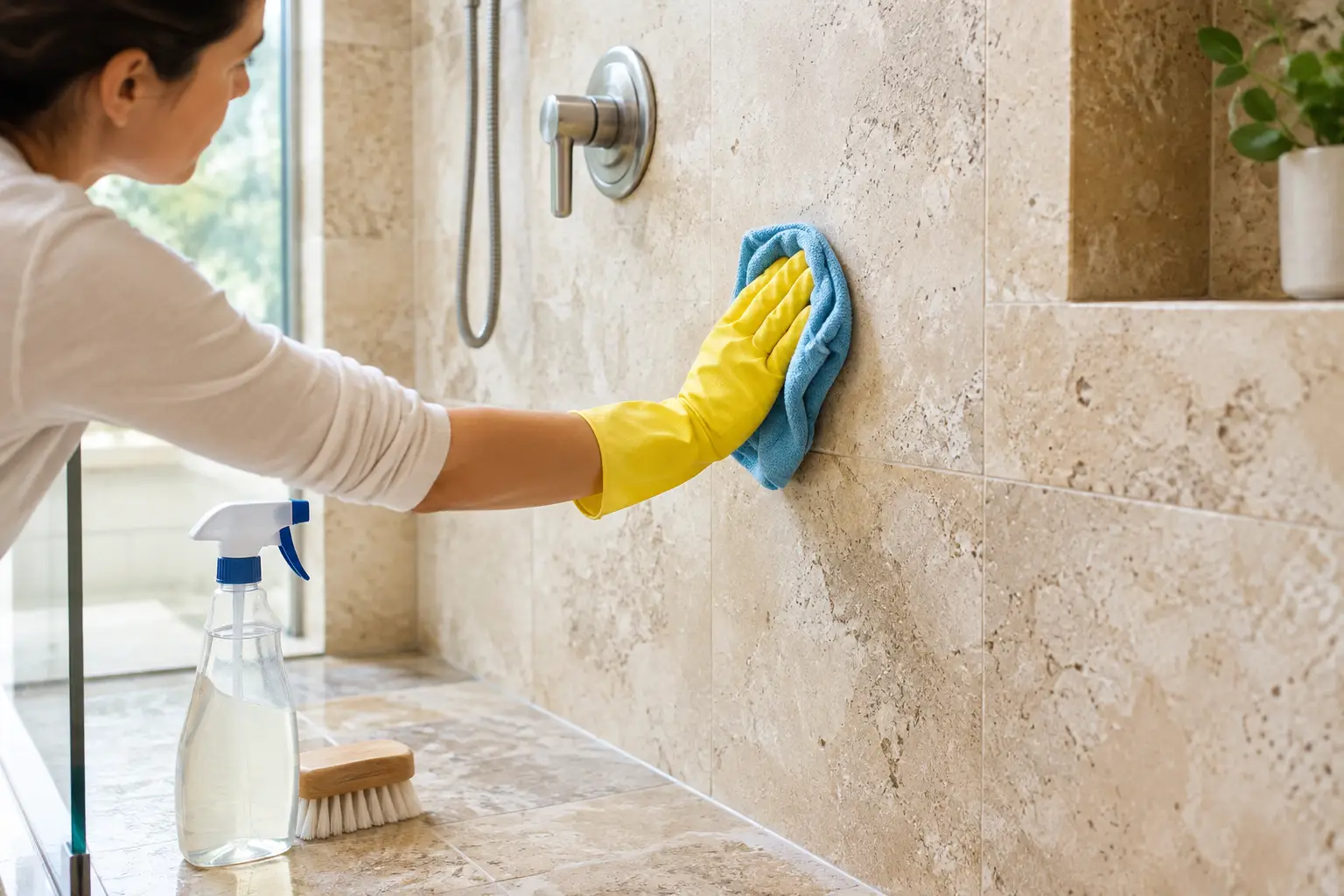
How to Clean Travertine Shower Safely at Home
A travertine shower can look warm, refined, and timeless – until a harsh cleaner leaves cloudy spots, rough patches, or pale etch marks behind. Knowing how to clean travertine shower safely protects more than its appearance. It helps preserve a natural stone surface that can be costly to repair or replace.
Travertine is not like ceramic tile. It is a porous form of limestone, which means it can absorb moisture and react badly to acidic or abrasive cleaning products. The same product that cuts through soap scum on a standard shower can permanently damage natural stone. With the right routine, though, most showers can stay clean without aggressive chemicals or hard scrubbing.
Why Travertine Needs a Different Cleaning Approach
Travertine contains natural pores, holes, and mineral variation that give it character. In a shower, those features also create places where soap residue, body oils, hard-water minerals, and mildew can collect. If the stone has been properly sealed, it has some protection. Sealers slow absorption, but they do not make travertine stain-proof or acid-proof.
Acid is the main concern. Vinegar, lemon-based cleaners, many bathroom sprays, and some mold removers can etch travertine. Etching is a chemical reaction that dulls the stone’s finish. It is not simply leftover residue that can be wiped away. Abrasive powders, stiff brushes, and scouring pads can create scratching and wear down the surface as well.
Bleach deserves caution, too. It may seem like the obvious answer to mildew, but repeated use can weaken grout, affect sealers, and create a harsh cleaning cycle that is unnecessary for routine care. The safest choice is a cleaner labeled specifically for natural stone or a pH-neutral cleaner without acids or abrasives.
What to Use to Clean a Travertine Shower Safely
For normal weekly cleaning, keep the process simple. Use a pH-neutral stone cleaner, warm water, a soft microfiber cloth or nonabrasive sponge, and a soft-bristle nylon brush for grout lines or textured areas. A small squeegee is also one of the best tools in the shower because it removes water before minerals and soap residue have time to dry on the stone.
Read the cleaner label before starting. A product can say it is safe for tile while still being unsuitable for natural stone. Look for language that specifically says it is safe for marble, limestone, travertine, or natural stone. Avoid products with vinegar, citric acid, phosphoric acid, hydrochloric acid, ammonia, or gritty abrasive ingredients.
If you are unsure about a product, test it in a small hidden area first. This is especially worthwhile in older showers, vacation rentals, or properties where you do not know the stone’s maintenance history.
A Safe Routine for Weekly Shower Cleaning
Start by removing loose debris
Rinse the shower walls and floor with warm water. This lifts surface dust, loose hair, and fresh soap residue so they are not dragged across the stone during cleaning. Pay attention to corners, niches, and the area around the drain, where buildup often starts.
Apply cleaner gently
Spray a pH-neutral stone cleaner directly onto the surface or onto a damp microfiber cloth. Follow the label directions for dwell time. More product and more time are not always better. Allowing a cleaner to dry on the stone can leave residue, especially in warm, well-lit bathrooms.
Work in manageable sections. Wipe the walls from top to bottom, then clean benches, shelves, fixtures, and the floor. A soft brush can be used with light pressure on textured travertine or grout. The goal is to loosen buildup, not scrub the surface aggressively.
Rinse and dry the stone
Rinse thoroughly with clean water after cleaning. Leftover cleaner can leave a film that attracts more soil and makes the finish look dull. Dry the travertine with a clean microfiber towel, or use a squeegee on the walls before towel-drying the edges and floor.
This drying step matters in West Hawaii’s humid conditions, where a shower that stays damp can encourage mildew and mineral deposits. Good ventilation and a wiped-down shower after use go a long way toward preventing the heavier cleaning jobs no one wants.
Removing Soap Scum and Hard-Water Buildup
Soap scum and mineral deposits are common shower problems, but they should not be attacked with the usual acidic bathroom products. On travertine, start with a pH-neutral stone cleaner and a soft cloth. For a heavier film, repeat the process rather than increasing the pressure or reaching for a stronger chemical.
Some stone-safe products are designed for soap scum, but always confirm they are approved for travertine. If buildup is thick, white, crusty, or concentrated around fixtures and glass edges, professional cleaning may be the safer option. Mineral removal requires the right chemistry and technique. A mistake can etch the stone in minutes, while correcting that damage can require honing and restoration.
Hard water also affects grout. If grout is darkening, staining, or developing a persistent white film, it may be time for a deeper stone, tile, and grout cleaning rather than another round of household products.
What to Do About Mildew on Travertine
Mildew is often a moisture and ventilation problem before it becomes a cleaning problem. Use the bathroom exhaust fan during showers and for at least 20 to 30 minutes afterward. Open a window when practical, hang towels to dry fully, and avoid leaving wet bottles or bath mats against stone surfaces.
For light surface mildew, clean with a stone-safe, pH-neutral product and dry the area thoroughly. Do not assume that black discoloration is just surface mildew, especially when it appears in cracked grout, failed caulk, or deep stone pores. Moisture can travel behind shower walls, and cleaning the visible stain will not solve the source.
If mildew keeps returning in the same spot, inspect the caulk, grout, and shower door seals. Damaged caulk should be removed and replaced instead of repeatedly treated with harsh cleaners. That approach protects both the stone and the structure behind it.
Do Not Make These Common Travertine Cleaning Mistakes
The biggest mistake is using vinegar because it is inexpensive and familiar. Vinegar is acidic, and acidity can permanently etch travertine. Lemon juice, acidic toilet-bowl cleaners, rust removers, and many multipurpose bathroom sprays carry the same risk.
Another problem is using stiff scrub brushes, steel wool, melamine sponges, or powder cleansers. They may make a shower look better temporarily, but they can scratch the finish and leave the surface more likely to hold dirt. Avoid mixing cleaning chemicals as well. Mixing products can create dangerous fumes and makes it harder to know what is reacting with the stone.
Finally, do not mistake a dark, blotchy, or dull shower for something that simply needs more cleaner. Travertine can show etching, absorbed moisture, failed sealer, grout discoloration, and residue in similar ways. The right repair depends on the actual cause.
Sealing Helps, but It Is Not a Free Pass
A quality penetrating sealer is an important part of travertine shower care. It helps resist water and everyday contaminants without creating a thick topical coating on the surface. Still, sealing does not prevent etching from acid, and it does not replace routine cleaning and drying.
How often a shower needs resealing depends on the type of stone, the sealer used, shower traffic, and cleaning habits. A simple water test can offer a clue: if a few drops of water darken the stone quickly instead of beading on the surface, the sealer may be wearing down. That does not automatically mean it is time to apply another product. The stone should be clean, dry, and evaluated first, since sealing over residue can trap problems in place.
For homeowners and property managers, professional assessment is particularly useful when a shower has uneven color, recurring mildew, rough etched areas, or years of product buildup. Jensen’s Cleaning takes a restoration-minded approach to stone and tile care, focusing on the safest way to renew a surface before replacement is considered.
A little consistency protects travertine better than any harsh cleaner: use stone-safe products, rinse thoroughly, dry the shower after use, and address small changes before they become permanent damage.