Kamuela Stone Floor Care That Protects Your Home
A stone floor can make a Kamuela home feel cool, solid, and timeless, but it also shows neglect in ways that are easy to miss at first. Fine volcanic grit can dull a finish, tracked-in moisture can leave a haze, and the wrong cleaner can gradually etch or discolor the surface. Proper Kamuela stone floor care is less about making stone look artificially shiny and more about protecting the material, preserving its natural character, and preventing expensive restoration work.
Natural stone is not one single type of floor. Travertine, marble, limestone, granite, slate, and engineered stone surfaces all react differently to moisture, cleaners, foot traffic, and sealers. A dependable maintenance routine starts by understanding what is actually underfoot.
Why Stone Floors Need Different Care in Kamuela
Stone is durable, but it is not indestructible. Many natural stones contain pores, veins, or softer mineral components that can absorb spills and soil. Even dense stone can develop a cloudy appearance when dirt, cleaning residue, sunscreen, kitchen oils, or mineral deposits are allowed to build up.
In and around Kamuela, homes often contend with dust and grit brought in from driveways, lanais, and outdoor living areas. Vacation properties may also sit closed up between stays, leaving moisture and residue in bathrooms, entryways, or kitchens. These conditions do not mean stone floors are a poor choice. They simply mean that routine care needs to be consistent and appropriate for the surface.
A floor that looks dull is not always dirty in the ordinary sense. It may have a worn finish, an uneven or failing sealer, etching from acidic products, or residue left behind by repeated mopping. Treating every problem with a stronger cleaner can make the damage worse.
Start With the Right Daily and Weekly Habits
The most effective stone floor care happens before grime gets ground into the surface. Dry soil is abrasive. When it is walked across stone repeatedly, it can wear down the finish and leave a scratched or hazy path in high-traffic areas.
Use a clean microfiber dust mop or a soft-bristle vacuum attachment regularly, especially near exterior doors, kitchens, and pet areas. Avoid vacuum heads with hard wheels or stiff, worn brushes that can scratch softer stone. Entry mats inside and outside the door make a real difference, provided they are cleaned often enough that they do not become a source of dirt themselves.
For damp mopping, use a small amount of a cleaner made specifically for natural stone and follow its dilution directions. A well-wrung microfiber mop is usually a better choice than soaking the floor. Excess water can carry soil into grout joints, linger in porous areas, and leave a film as it dries.
Just as important is what not to use. Vinegar, lemon-based cleaners, bathroom descalers, ammonia-heavy products, bleach, and many all-purpose cleaners are poor choices for natural stone. Acidic products can etch marble, travertine, and limestone, while harsh chemicals may weaken sealers or alter the color of some stones. Steam cleaning can also create problems when high heat and moisture reach vulnerable grout, cracks, or improperly sealed areas.
Know the Difference Between Dirt, Etching, and Damage
Homeowners often assume a faded spot needs more scrubbing. On stone, that is not always true. If a surface has been etched by an acidic spill or cleaner, the affected area may feel smoother or rougher than the surrounding floor, depending on the stone and finish. It may look lighter, duller, or cloudy, yet ordinary cleaning will not remove it because the finish itself has changed.
A darkened area near a sink, refrigerator, planter, or exterior door can point to moisture intrusion or staining. White, chalky residue may be mineral buildup or efflorescence, which happens when moisture moves through masonry materials and leaves minerals behind. Loose grout, cracks, and uneven tiles need attention as well, because they allow more soil and moisture to reach places that are hard to clean.
It pays to pause before trying a store-bought stain remover or polishing product. Some products are designed for a specific stone, while others can create a temporary shine that attracts soil or leaves the floor slippery. A professional evaluation can identify whether the floor needs deep cleaning, stain treatment, honing, grout restoration, sealing, or a combination of services.
Sealing Is Protection, Not a Permanent Fix
Many stone floors benefit from a quality penetrating sealer. This type of product helps slow the absorption of water and oil-based spills, giving you more time to wipe them up. It does not make stone waterproof, scratch-proof, or immune to etching.
How often a floor needs sealing depends on the stone type, the finish, traffic levels, prior treatments, and where the floor is installed. A busy kitchen or entryway may need attention sooner than a lightly used bedroom. Honed and textured surfaces can hold soil differently than polished stone, and grout often needs separate consideration.
A simple water-drop check can be useful, but it is not a complete diagnosis. If clean water darkens the stone quickly, it may indicate that the surface is absorbing moisture. Still, applying more sealer over residue, an old topical coating, or a floor that has not been properly cleaned can trap problems rather than solve them. Preparation matters as much as the sealer itself.
When Professional Stone Floor Care Makes Sense
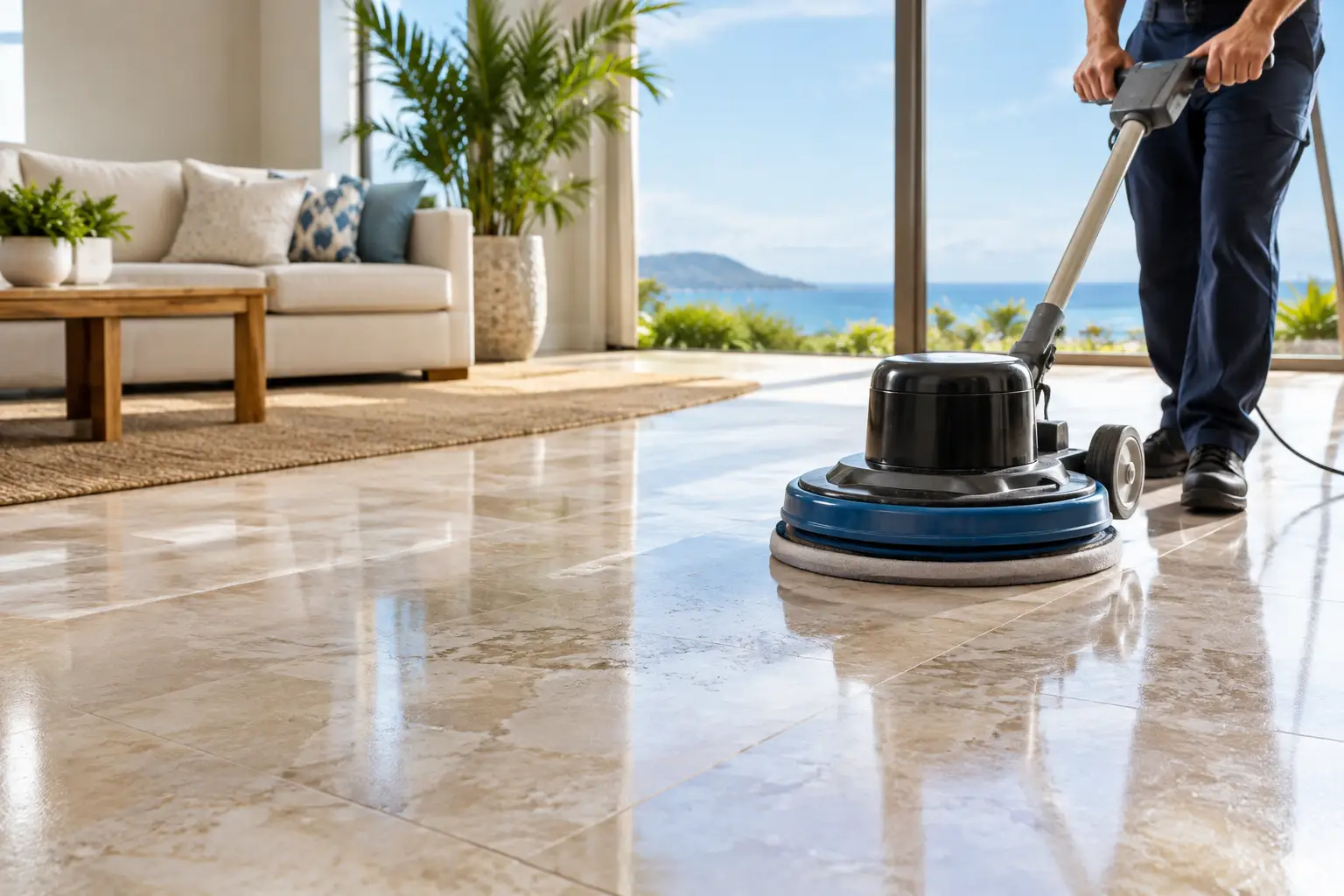
Routine home cleaning protects a floor between services, but professional care is valuable when the surface has lost its even appearance or has become difficult to maintain. Specialized equipment and stone-safe products can remove embedded soil and residue without relying on overly aggressive chemicals.
Professional service is particularly worthwhile when you notice:
- Persistent haze or dark traffic paths that return soon after mopping
- Stains around kitchens, bathrooms, planters, or exterior entries
- Grout lines that remain dark, greasy, or discolored after cleaning
- Dull, etched, scratched, or uneven-looking sections of stone
- Slippery buildup from old polish, wax, or unsuitable cleaning products
The right approach depends on the surface. A deep cleaning may be enough for one floor, while another may need controlled restoration to address etching or wear before it is resealed. A trustworthy technician should explain what can realistically be improved, what may remain visible, and why a particular process is recommended. Stone restoration is not a one-size-fits-all service.
Protect High-Use Areas Before They Show Wear
Kitchens, main entries, bathrooms, and lanai transitions deserve extra attention because they experience the most moisture and abrasion. Wipe spills promptly, especially coffee, wine, cooking oil, juice, pet accidents, and acidic foods. Use breathable rugs or mats in areas where water is common, and avoid rubber-backed mats that can trap moisture against the floor or leave discoloration over time.
Furniture pads also help prevent scratches when chairs, tables, and heavy pieces are moved. If you manage a vacation rental or hospitality space, provide simple cleaning guidance for guests and schedule periodic professional maintenance before the wear becomes obvious in listing photos or guest reviews.
For homeowners and property managers, preventive care is usually the most cost-effective choice. Maintaining a clean, properly sealed stone floor is far easier than correcting years of residue, stains, and surface damage.
A Local, Practical Approach to Stone Maintenance
Stone floors are an investment in the appearance and value of a property. They should not be treated like vinyl, ceramic tile, or ordinary hard flooring. Careful cleaning, the right products, and timely professional help can keep the stone looking natural rather than overworked.
Jensen’s Cleaning helps West Hawaii homeowners, businesses, and property managers address stone, tile, and grout concerns with restoration-minded service, fair and honest recommendations, and attention to the details that protect the floor beneath the dirt. If your stone has become dull, stained, or difficult to clean, getting the surface assessed early can preserve more of its original beauty and help avoid unnecessary replacement.