Upholstery Cleaning for Delicate Fabric
That light-colored sofa looked perfect when it arrived. Then came sunscreen, body oils, red dirt, salty air, spilled coffee, and the kind of daily use that slowly changes delicate fabric from fresh to tired. Upholstery cleaning for delicate fabric is not just about making furniture look better. It is about removing buildup without causing shrinkage, dye bleed, texture damage, or water marks that can be harder to fix than the original soil.
Fine upholstery tends to hide risk behind a soft finish. Linen, cotton blends, silk accents, rayon, velvet, and specialty woven fabrics can react very differently to moisture, agitation, heat, and cleaning agents. What works on a durable family-room sectional can permanently change the feel or appearance of a more sensitive piece. That is why delicate upholstery should be approached with a restoration mindset, not a one-size-fits-all cleaning method.
Why upholstery cleaning for delicate fabric needs a different approach
Delicate fabric holds soil in a way that is not always obvious at first glance. The armrests may darken slowly. Seat cushions may collect fine grit that settles deep into the weave. A fabric can still feel soft while carrying oils, dust, allergens, and residue that wear it down over time.
The challenge is that gentle does not mean ineffective, and strong does not mean better. On delicate upholstery, over-wetting can leave rings or browning. Aggressive scrubbing can distort fibers or create fuzzing. The wrong spotting product can strip color or set a stain. Even a well-meaning do-it-yourself attempt can turn a manageable issue into permanent damage.
Professional cleaning starts with identifying the fiber, the construction, the dyes, the level of soiling, and any existing wear. Those details shape the method. In some cases, lower moisture cleaning is the safest choice. In others, controlled extraction with specialized products produces the best result. Good results come from matching the process to the fabric instead of forcing the fabric to fit the process.
The biggest risks with delicate upholstery
Some upholstery problems are visible right away. Others show up after the fabric dries. That is part of what makes delicate pieces tricky.
Shrinkage is a common concern, especially with natural fibers and loose weaves. Dye migration is another. A patterned cushion can lose sharpness if colors move during cleaning. Texture change is also a real issue. Velvet, chenille, and similar fabrics can flatten, streak, or lose their original hand if cleaned too aggressively.
There is also the issue of hidden instability. Older furniture may have weakened backing, sun-faded panels, or previous cleaning residue that makes current treatment less predictable. That does not mean the piece cannot be cleaned. It means expectations and methods need to be realistic. Sometimes improvement is the goal, not perfection.
Why DIY spot cleaning often backfires
The first reaction to a spill is usually to grab a towel and a household cleaner. Fast action matters, but the wrong action can spread the stain, leave a ring, or push moisture deeper into the cushion.
Many over-the-counter products are designed for broad use, not fine upholstery. They may leave residue that attracts more soil later. Some contain brighteners or harsh solvents that do not belong on sensitive fabric. Even plain water can create marks on certain materials if it is applied unevenly.
Blotting with a clean, dry towel is usually safer than rubbing. After that, it depends on the fabric and the stain. If you are dealing with a high-value item, a natural fiber, or a fabric with unclear cleaning codes, caution saves money.
How professionals clean delicate fabric safely
A careful upholstery service should begin with inspection and testing. Fiber identification, dye stability checks, and a review of wear patterns help determine what the fabric can tolerate. This is where experience matters. Two chairs may look similar but require very different handling.
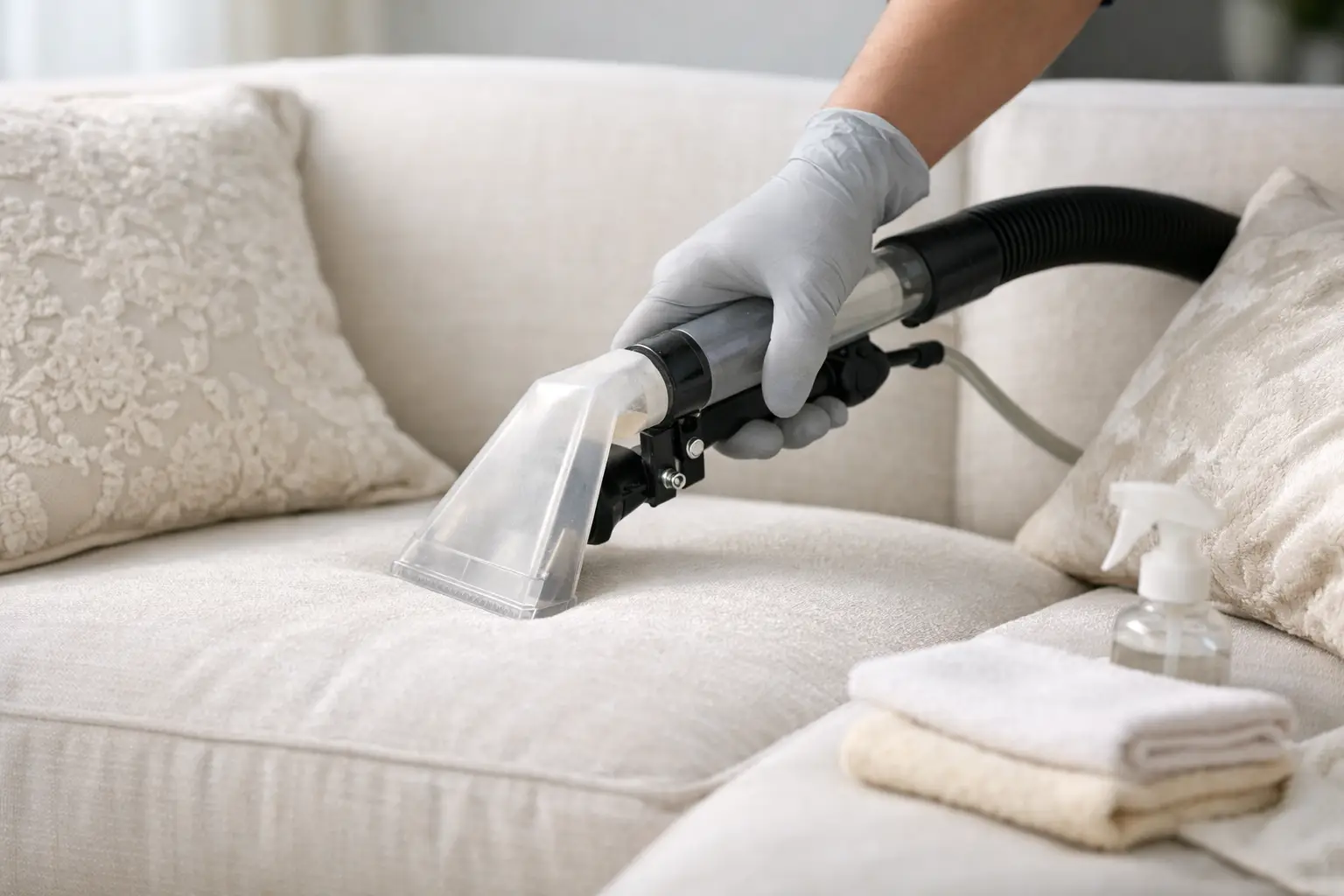
Pre-treatment is typically selective, not heavy-handed. The goal is to loosen soils and body oils without saturating the fabric. Tools also matter. Soft upholstery attachments, controlled moisture application, and proper extraction help remove contamination while limiting stress on the material.
Drying is just as important as cleaning. Delicate upholstery should not stay damp longer than necessary. Controlled drying helps reduce the risk of odor, browning, mildew issues, and texture distortion. In humid coastal environments, this part of the process deserves real attention.
It depends on the fabric type
Natural fibers often require the most caution. Linen can respond well to proper cleaning but may wrinkle or brown if over-wet. Cotton can shrink or lose shape if mishandled. Silk blends and decorative fabrics may need specialized low-moisture treatment or, in some cases, a recommendation for off-site specialty care.
Synthetic blends are often more forgiving, but not always. Rayon can be especially sensitive to water and agitation. Velvet may need grooming to restore appearance after cleaning. Microfiber can clean up beautifully, yet it can also show marks if treated unevenly.
That is why labels help, but they are not the full story. Cleaning codes provide a starting point. They do not replace testing, judgment, and experience with real-world upholstery conditions.
When cleaning can improve more than appearance
People usually call for upholstery cleaning because the furniture looks dingy or stained. That is reason enough, but appearance is only part of the value.
Upholstery collects dust, pollen, skin cells, oils, and fine particulate soil. In busy households, vacation rentals, offices, and hospitality spaces, that buildup can affect the feel of the furniture and the freshness of the room. Professional cleaning can reduce residue and help create a cleaner indoor environment, especially when furniture gets heavy use.
For property managers and business owners, there is another benefit. Clean upholstery presents better. Guests notice the condition of chairs in a lobby, cushions in a waiting area, and seating in a rental property. Replacing furniture early is expensive. Proper maintenance helps protect the investment and extend usable life.
How often delicate upholstery should be cleaned
There is no perfect schedule for every home or business. A lightly used formal chair may need attention far less often than a daily-use sofa near a sunny window. Homes with pets, children, or frequent guests usually need more regular service. Vacation properties can also build up soil faster than expected because of sunscreen, sand, food spills, and quick guest turnover.
For many delicate pieces, professional cleaning every 12 to 24 months is a reasonable range. Higher traffic furniture may need more frequent care, while decorative pieces may need less. The best timing often comes down to visible soiling, odor, and how the fabric feels, not just the calendar.
Between cleanings, a few habits help. Regular vacuuming with a soft brush attachment removes dry soil before it settles deeper. Rotating cushions can reduce uneven wear. Keeping furniture out of direct sun helps preserve color and fiber strength. Quick, careful attention to spills also makes a difference.
Choosing the right company for delicate upholstery
Not every upholstery cleaner handles delicate fabric with the same level of care. If a company treats every sofa the same way, that is a concern. Delicate upholstery needs inspection, testing, fabric-specific methods, and clear communication about likely results and limitations.
Look for a company that is certified, insured, and willing to explain the process in plain language. Honest pricing matters, but so does honest guidance. Sometimes the right professional will tell you a stain may improve without disappearing completely, or that a worn armrest is a wear issue rather than a cleaning issue. That kind of transparency builds trust because it is focused on protecting the piece, not just winning the job.
For homeowners and property managers in West Hawaii, that balance matters even more. Furniture here deals with unique conditions, from coastal humidity and salt exposure to frequent guest use and tracked-in soil. A local company with restoration-oriented experience understands that cleaning is not simply about surface appearance. It is about helping furniture last.
At Jensen’s Cleaning, that is the standard delicate upholstery deserves – careful assessment, professional equipment, safe products, and service built around doing the job right.
A beautiful fabric does not need harsh treatment to come back to life. It needs the right process, the right hands, and a little respect for what makes it different in the first place.