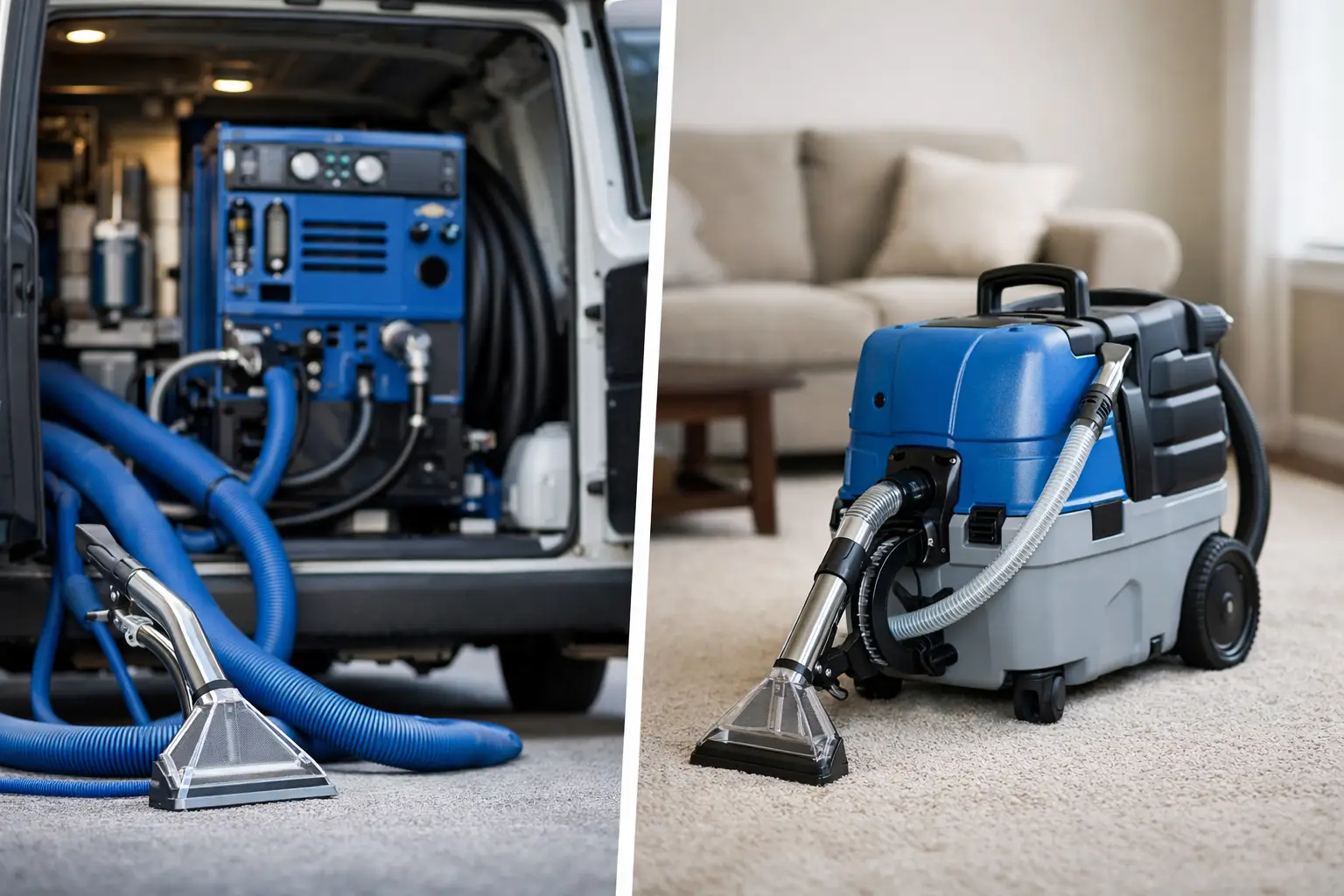
Truck Mounted vs Portable Extractor
If you have ever booked carpet or upholstery cleaning and wondered why one company talks about a truck-mounted system while another arrives with a portable unit, you are really asking the right question: truck mounted vs portable extractor. The answer affects how deeply your surfaces get cleaned, how quickly they dry, and how well the process fits your property.
For homeowners, property managers, and business owners, this is not just about equipment preference. It is about results. A machine is only part of the picture, but the type of extraction system does shape cleaning performance in a very real way.
Truck mounted vs portable extractor: what is the difference?
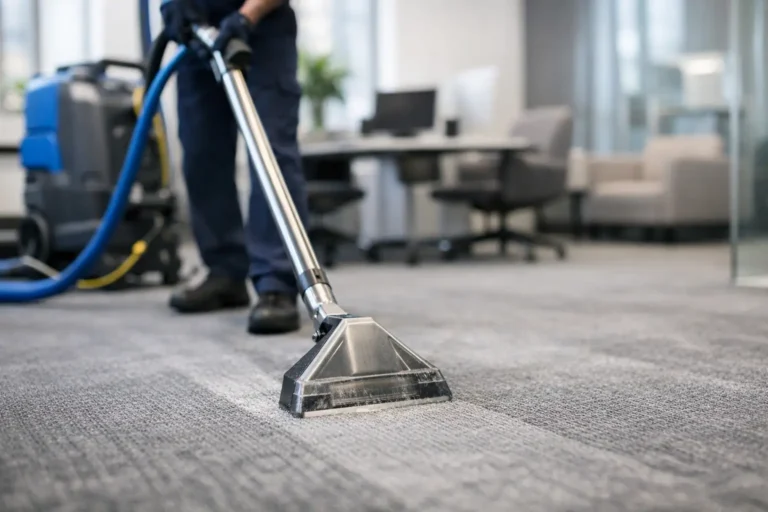
A truck-mounted extractor is a professional cleaning machine installed inside a van or truck. It stays outside the building while technicians run hoses indoors for water, solution, and recovery. These systems typically deliver stronger vacuum, higher heat, and more consistent power because they are built for large-scale professional use.
A portable extractor is a smaller unit that is brought inside the property. It plugs into the building’s electrical system and is moved room to room as needed. Portable machines can still clean effectively in the right hands, but they usually operate with less vacuum strength, lower heat, and smaller water and recovery tanks.
That basic difference matters because extraction cleaning depends on three things working together: solution, agitation, and recovery. When recovery is stronger, more soil and moisture are removed from the carpet or fabric instead of being left behind.
Why truck-mounted systems usually clean deeper
In most side-by-side comparisons, truck-mounted equipment has the advantage in raw cleaning performance. Stronger suction helps pull suspended soil, cleaning solution, and moisture out of carpet fibers more completely. Higher and more consistent heat can also help break down oily residue and stubborn buildup, especially in heavily used areas.
That deeper rinse matters in homes with kids, pets, allergy concerns, or high traffic. It also matters in commercial settings where carpet collects layered soil over time instead of just surface dust. When more residue is left behind, carpets can resoil faster and feel less fresh soon after cleaning.
This is one reason professional companies that focus on restoration-level results often prefer truck-mounted systems for carpet, tile, grout, and many upholstery applications. The goal is not to make a surface look a little better for a few days. The goal is to remove what should not be there and extend the life of the material.
Drying time is a bigger deal than many people realize
One of the clearest benefits of truck-mounted extraction is faster drying. Because the vacuum is stronger, more water is recovered during the cleaning process. Less leftover moisture means carpets and upholstery usually dry sooner.
That is important for comfort, but it is also important for practical reasons. Shorter dry times reduce inconvenience in busy households, vacation rentals, offices, and hospitality spaces. They also help lower the risk of musty odors, wicking, or moisture-related issues that can happen when materials stay damp too long.
Portable extractors can still produce acceptable drying times when used properly, especially for lighter cleaning or small jobs. But in many cases, they leave more moisture behind. On heavily soiled carpet or thicker upholstery, that difference becomes more noticeable.
Where portable extractors have the advantage
Portable units are not automatically the lesser choice in every situation. There are properties where they make more sense.
A portable extractor can be useful in high-rise buildings, secure facilities, or locations where long hose runs from a truck are not practical. If access is limited, parking is far away, or the cleaning area is several floors up, a portable unit may simply be the workable option. In some condos and commercial spaces, building layout makes outside-mounted equipment less convenient.
Portable machines can also be helpful for spot work, small rooms, or jobs where setup needs to be tight and controlled. A skilled technician can get solid results with portable equipment, especially when the fabric or surface requires a more careful, lower-moisture approach.
So when looking at truck mounted vs portable extractor, the right answer is not always about which machine is stronger. It is also about where the cleaning is happening and what the surface needs.
Noise, access, and convenience at the property
Truck-mounted systems stay outside, which means the main machine noise is usually outside as well. Inside the property, you mostly hear the hoses and cleaning process, not the full engine and vacuum system beside you. For some clients, that makes the appointment feel less disruptive.
Portable units operate inside the building, so the machine noise is in the room or nearby hallway. That may not matter in every setting, but it can be a factor in occupied offices, healthcare-adjacent spaces, or homes with napping children.
At the same time, truck-mounted cleaning requires hose access through a door or entry point. In most homes and ground-level businesses, this is straightforward. In buildings with restricted access, elevators, or long internal distances, a portable machine may be easier to position where the work needs to happen.
Does one cost more than the other?
Often, yes. Truck-mounted cleaning can cost more because the equipment itself is more advanced, the operating costs are higher, and the service is usually positioned as a deeper professional clean. But price alone can be misleading.
If a lower-priced portable cleaning leaves behind residue, takes longer to dry, or does not remove enough embedded soil, the carpet may not stay clean as long. That can lead to more frequent service or a shorter usable life for the flooring or upholstery. In that case, the lower upfront cost is not really the better value.
On the other hand, not every job needs maximum extraction power. For a small maintenance cleaning in a space with access limitations, a portable unit may be completely reasonable. Good service means matching the method to the job instead of forcing the same setup everywhere.
The machine matters, but the technician matters too
It would be easy to say truck-mounted equipment always wins and leave it there. That would not be honest. Equipment matters, but training, fiber knowledge, spotting skill, and judgment matter just as much.
A poorly trained operator with excellent equipment can still overwet a carpet, leave residue, damage delicate upholstery, or miss the real source of a problem. A skilled cleaner understands how to adjust pressure, heat, chemistry, and drying technique based on the material being cleaned.
This is especially important with area rugs, natural fibers, upholstery, and specialty surfaces. Some items need aggressive soil removal. Others need a more controlled approach to avoid browning, shrinkage, distortion, or dye issues. Professional cleaning should never be one-size-fits-all.
How to choose between truck mounted vs portable extractor
Start with the surface, the level of soil, and the building access. If you are cleaning heavily used carpet in a home, office, or rental property with normal ground-level access, a truck-mounted system is usually the stronger option. You are more likely to get deeper soil removal and faster drying.
If the job is in a multi-story building with difficult access, limited parking, or property rules that make hose runs impractical, a portable extractor may be the better fit. The same can be true for certain detailed upholstery jobs or smaller service areas where mobility matters more than maximum power.
It also helps to ask a few practical questions before booking. What equipment will be used? How long should drying take? How will the company handle stains, pet issues, or delicate fabrics? Are they insured, experienced, and willing to explain why a certain method is best for your property?
Those answers tell you more than a simple equipment label ever will.
What this means for homes and businesses in West Hawaii
In West Hawaii, dry times and deep extraction can be especially important in busy households, vacation rentals, and commercial spaces that cannot stay out of service for long. Properties also deal with tracked-in soil, food and drink spills, beach traffic, and the day-to-day wear that builds up faster than most people expect.
That is why many customers prefer a professional service that uses truck-mounted equipment when access allows it. Companies like Jensen’s Cleaning invest in methods that are built around real cleaning results, not just quick appearance improvement. Still, the best approach is always the one that fits the material, the condition, and the property layout.
If you are comparing options, do not get stuck on marketing language alone. Ask what will remove the most soil, leave the least residue, and get your space back to normal the fastest. The best cleaning choice is the one that respects both your surfaces and your time.