Stone Restoration, Tile and Grout Cleaning, and Sealing
A stone floor can look permanently worn long before it is ready to be replaced. In West Hawaii, fine outdoor grit, humidity, splashes, and everyday foot traffic settle into porous stone and grout joints quickly. Professional stone restoration tile and grout cleaning sealing addresses the buildup at its source, then protects the surface so it is easier to maintain.
The goal is not to make every floor look artificially glossy. It is to bring back the clean, even appearance that suits the material, whether that means a natural honed finish, a soft sheen, or a carefully polished stone surface. The right process depends on the type of stone, the condition of the grout, and what has been applied to the floor in the past.
Why Tile, Grout, and Stone Lose Their Clean Look
Tile itself may be durable, but its texture, edges, and grout lines collect more than a mop can remove. Grout is especially vulnerable because it is porous. It can absorb soil, cooking residue, bathroom products, spills, and moisture. Over time, light-colored grout often turns dark or uneven, making an otherwise clean room feel neglected.
Natural stone has a different set of concerns. Travertine, marble, limestone, slate, and other stone surfaces can absorb contaminants or react poorly to the wrong cleaner. Acidic products may etch sensitive stone. Harsh degreasers can strip protective treatments. A floor can also develop a dull, hazy appearance from soap residue or incompatible coatings rather than from dirt alone.
That is why a one-size-fits-all cleaning approach is risky. A ceramic tile floor with stained grout may need a different method than a polished marble entryway or a textured travertine lanai. Cleaning should start with identifying the surface and the cause of the discoloration.
What Professional Stone Restoration and Grout Cleaning Includes
A professional visit begins with an evaluation of the floor’s material, finish, traffic patterns, and visible concerns. This helps determine whether the floor needs deep cleaning alone, grout treatment, stone restoration, sealing, or a combination of services.
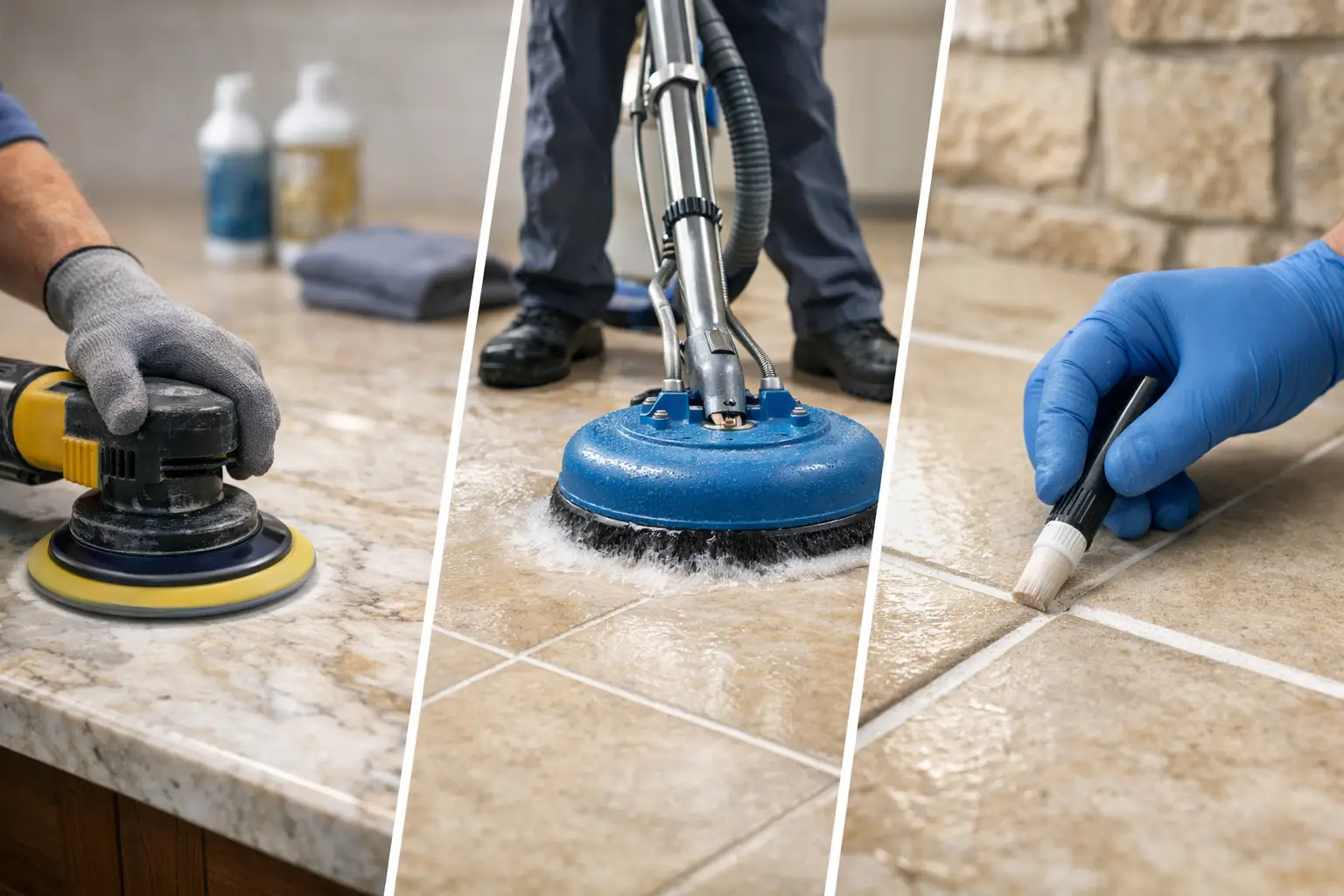
For tile and grout, specialized products are used to loosen embedded soil without unnecessarily damaging surrounding surfaces. Professional equipment then extracts the released grime from the tile and grout lines. This matters because pushing dirty water around with a mop can leave residue behind, especially in textured tile and recessed grout.
Stone restoration may include cleaning away buildup, treating stains where possible, addressing dullness, and restoring a more consistent finish. Depending on the stone, this can involve honing or polishing techniques. Not every mark can be removed completely, particularly if a stain has penetrated deeply or the surface has permanent wear. Honest expectations are part of good restoration work.
Cleaning Is Not the Same as Restoration
A deep cleaning removes accumulated soil and residue. Restoration goes further when the surface has etching, scratches, dull traffic paths, uneven sheen, or mineral deposits that have changed its appearance. A clean floor may still look tired if the finish itself has been compromised.
Conversely, not every dull floor needs an aggressive restoration process. Sometimes residue removal and proper sealing produce a major improvement. A qualified technician should recommend the least invasive process that delivers a meaningful result.
Grout Color Can Be Improved, But Results Depend on Condition
Deep cleaning can dramatically improve grout that is darkened by soil. However, grout that has been permanently stained, damaged by chemicals, or worn away may need repair or color sealing for a more uniform appearance. Color sealing is a separate option from clear sealing and can be useful in high-traffic kitchens, bathrooms, vacation rentals, and commercial spaces where grout needs a more consistent look.
Why Sealing Matters After Cleaning
Sealing is the protective step that helps preserve the work. Most grout and many natural stones are porous, meaning they contain tiny openings that can take in moisture, oils, and soils. A quality penetrating sealer helps slow that absorption, giving you more time to wipe up spills before they become a problem.
A sealer is not a permanent shield, and it does not make a floor maintenance-free. It will not stop surface scratching, prevent every stain, or correct existing damage. What it does is make routine cleanup easier and reduce the chance that everyday spills will penetrate as quickly.
The right sealer also depends on the material. Some products are designed for dense stone, while others are better suited to porous grout or textured natural stone. Applying too much sealer, using the wrong product, or allowing it to dry on the surface can leave a haze or sticky residue. Proper preparation and application are just as important as the product itself.
Signs It Is Time to Schedule Service
A floor does not need to look severely damaged before professional care makes sense. It may be time for tile, grout, or stone service when regular mopping no longer improves the appearance; grout lines stay dark after cleaning; the floor feels sticky or looks hazy; water quickly darkens natural stone; or bathrooms show persistent mildew staining around grout and tile edges.
Property managers often notice the need between guest stays, after a tenant move-out, or before listing a property. For homeowners, the most common trigger is realizing that the floor looks dirty again shortly after it has been cleaned. That is often a sign of embedded soil, residue, or a missing protective barrier rather than a housekeeping problem.
In West Hawaii, entryways, lanais, kitchens, and bathrooms deserve particular attention. Sand and grit can act like abrasives underfoot, while moisture and frequent use create conditions for soil to settle into grout. Maintaining these areas protects both the appearance of the property and the life of the flooring.
How to Care for Floors Between Professional Visits
Daily habits make a real difference after stone restoration, tile and grout cleaning, and sealing. Use mats at exterior entrances, then vacuum or sweep frequently so abrasive grit does not remain on the floor. For routine damp cleaning, use a cleaner that is appropriate for the specific surface and avoid leaving standing water in grout lines or on natural stone.
Avoid acidic cleaners, vinegar, bleach-heavy products, and abrasive scrub powders unless the product manufacturer specifically confirms they are safe for your floor. These products can etch certain stone, weaken grout, or leave residues that attract more soil. Steam can also be a poor choice for some surfaces, especially where there are failing grout joints, loose tile, or moisture-sensitive materials beneath the floor.
When spills happen, blot or wipe them promptly instead of letting them sit. Oils, wine, coffee, sauces, cosmetics, and bathroom products can all leave marks on porous materials. The faster the cleanup, the better the chance of preventing a lasting stain.
Choosing a Service Provider You Can Trust
Stone and grout work calls for more than a strong cleaner and a brush. Ask whether the provider evaluates the material before treatment, uses professional-grade equipment, explains what results are realistic, and carries appropriate insurance. Clear pricing and a willingness to answer questions are also good signs that the company is focused on long-term customer relationships rather than a quick transaction.
Jensen’s Cleaning brings a restoration-minded approach to tile, grout, and stone care for homes, vacation properties, and businesses throughout West Hawaii. The focus is on deep-cleaning results, careful surface treatment, fair and honest pricing, and service you can feel confident inviting into your property.
A floor is one of the largest visual surfaces in any room. When the stone is clean, the grout is refreshed, and the protective sealer is doing its job, the entire space feels better cared for. A timely professional assessment can often help you restore that appearance without the cost and disruption of premature replacement.