
Best Grout Cleaning Solutions for Hawaii Tile
Grout can make an otherwise clean tile floor look worn out fast. In West Hawaii, sand, red dirt, humidity, pool traffic, and everyday cooking residue settle into porous grout lines and create staining that mopping alone will not touch. The best grout cleaning solutions depend on what is in the grout, what type of tile surrounds it, and whether the problem is light surface soil or years of embedded buildup.
A stronger product is not always the better choice. The wrong cleaner can discolor grout, leave a sticky residue, damage natural stone, or create a safety issue when chemicals are mixed. The goal is to remove soil while protecting the tile, grout, and surrounding finishes so the floor looks better and lasts longer.
The Best Grout Cleaning Solutions Match the Soil
Before choosing a cleaner, look closely at the color and location of the staining. Gray or brown grout on a kitchen floor often points to tracked-in soil and oily residue. Dark spots in a shower may be mildew, soap film, or moisture-related staining. Orange or rust-colored marks can come from minerals in water, while white haze may be hard-water deposits or leftover cleaning product.
For routine dirt and light buildup, a pH-neutral tile and grout cleaner is usually the safest starting point. These products are designed for regular use and are especially useful on ceramic or porcelain tile. They will not perform miracles on neglected grout, but they can lift fresh soil without being overly aggressive.
For grease, body oils, food residue, and heavy traffic soil, an alkaline grout cleaner is often more effective. Alkaline formulas break down oils that neutral cleaners may leave behind. They work well in kitchens, entryways, restaurants, and vacation properties with frequent guest turnover. Follow the dilution directions carefully, give the solution time to work, and rinse thoroughly after cleaning.
Acidic cleaners have a narrower role. They may help with mineral deposits, rust staining, and certain types of haze, but they can etch or dull natural stone and may weaken cement-based grout when misused. Never use an acidic cleaner on marble, travertine, limestone, or other calcareous stone without confirming that it is safe for the surface.
What Works for Common Grout Problems
The right approach changes based on the source of the stain. Treating every dirty grout line with the same bottle from the store can lead to disappointing results.
Kitchen Floors and High-Traffic Areas
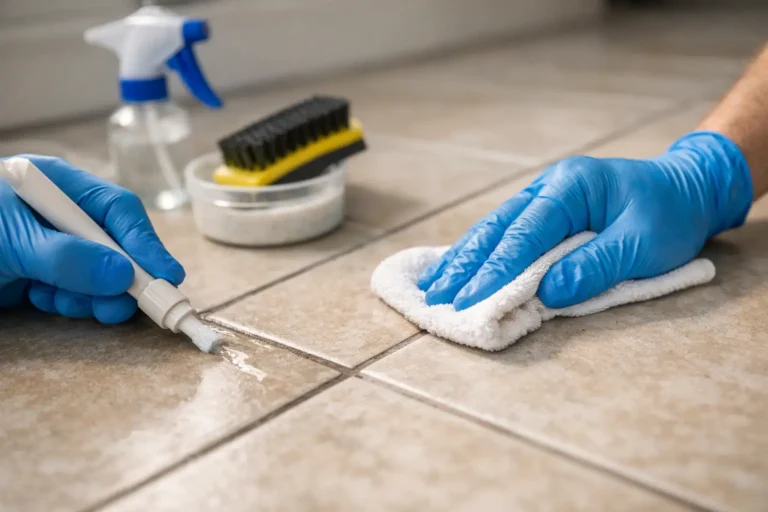
Most kitchen and entry grout needs a degreasing cleaner plus agitation. Apply the cleaner to a small section, allow it to dwell as directed, then scrub with a stiff nylon grout brush. Avoid metal brushes, which can scratch tile and break down grout. Pick up the dirty solution with a wet vacuum, microfiber towels, or a clean mop-and-rinse process rather than simply spreading it across the floor.
This last step matters. If dirty water dries back into the grout, the lines may look cleaner for a day or two, then appear dull again. Residue can also attract new soil more quickly.
Showers and Bathroom Tile
Bathroom grout often has more than one problem at once: soap residue, hard-water minerals, body oils, and mildew thrive where surfaces stay damp. Start with a cleaner made for soap scum and tile, then use a grout brush in small areas. Keep the room ventilated and wear gloves, particularly when working with stronger formulas.
If dark discoloration remains after cleaning, it may be staining below the surface or a moisture issue behind the tile. Bleach-based products can brighten some stains, but they do not fix failed caulk, loose tile, or water intrusion. Bleach should never be mixed with ammonia, acids, vinegar, or other cleaners. When in doubt, stop and have the surface evaluated.
Outdoor Tile, Pool Areas, and Lanai Floors
Outdoor grout takes a beating from windblown dirt, wet feet, sunscreen, landscaping debris, and Hawaii’s humid conditions. An outdoor-safe alkaline cleaner and controlled pressure rinsing may help, but high-pressure equipment can scar grout, force water behind tile, or remove weakened grout if used too close.
For textured tile and large lanai areas, professional equipment can provide a more even result because it combines cleaning action with powerful recovery. That recovery is valuable on porous grout, where dirty water is difficult to remove with a standard mop.
Natural Stone Tile
Natural stone requires a careful approach. Many popular household grout cleaners are too acidic or too harsh for stone, even if they work well on porcelain. Use a stone-safe, pH-neutral cleaner unless a qualified professional recommends another method. Protecting the stone finish is more important than chasing an instant result with the wrong chemical.
Why Scrubbing Alone Often Falls Short
A brush is useful, but grout is porous. Over time, soil works below the surface, especially in busy homes, rental properties, and commercial spaces. Hand scrubbing can improve appearance, but it may leave behind the embedded dirt and cleaning solution that cause grout to darken again.
Professional tile and grout cleaning usually combines specialized products, mechanical agitation, hot-water extraction, and strong recovery. Truck-mounted equipment can flush soil from grout lines and remove the wastewater rather than leaving it on the floor. This is particularly helpful when grout has not been professionally cleaned in years or when a large area needs consistent results.
There is a trade-off. Professional cleaning costs more than a bottle of cleaner and a brush, but it can reduce the risk of surface damage, save significant labor, and postpone unnecessary replacement. For heavily soiled grout, that value becomes clearer when the tile itself still has plenty of life left.
A Safer Routine Between Deep Cleanings
Clean grout stays cleaner when routine care focuses on removing soil before it settles. Sweep or vacuum hard floors frequently so abrasive grit is not ground into the surface. Use a microfiber mop with a properly diluted neutral floor cleaner, and change the water when it becomes cloudy.
Avoid coating tile with oily soaps, waxes, or all-purpose products that leave film behind. These residues can make floors look streaky and cause grout to collect dirt faster. In showers, use a squeegee after bathing and keep exhaust fans running long enough to reduce lingering moisture.
Once the grout is thoroughly cleaned and completely dry, a quality penetrating grout sealer may help resist future staining. Sealer is not permanent and does not make grout maintenance-free, but it can buy more time between deep cleanings. It also will not correct cracked, missing, or failing grout, which needs repair before sealing.
When It Is Time to Call a Professional
Consider professional service when grout remains dark after careful cleaning, the floor has widespread staining, or the tile is delicate natural stone. It is also a practical choice before listing a home, after a busy rental season, or when preparing a hospitality or commercial space for guests and customers.
A qualified cleaner should identify the tile material, explain the method being used, protect adjacent surfaces, and give clear expectations about what cleaning can and cannot restore. Deep staining, grout discoloration from age, and damaged grout may need repair, color sealing, or restoration in addition to cleaning.
For homeowners and property managers in Kailua-Kona and across West Hawaii, Jensen’s Cleaning approaches tile and grout with that restoration mindset. The right service should not simply make a floor look brighter for a few days. It should remove the buildup safely, protect the surfaces you have invested in, and leave you with a practical plan for keeping them clean.