How to Clean a Microfiber Sectional Safely
A microfiber sectional can look great for years, but it also tends to collect the evidence of daily life: sunscreen from a beach day, pet hair, snack crumbs, body oils, and the occasional spilled drink. Knowing how to clean microfiber sectional upholstery correctly starts with one rule: do not treat every microfiber fabric the same. The wrong cleaner can leave water rings, stiff spots, faded areas, or permanent marks.
A careful approach protects the fabric while improving its appearance. For many homeowners and vacation-property managers in West Hawaii, regular maintenance also helps a sectional hold up against humidity, frequent guests, and the fine dust that seems to find its way indoors.
Check the Cleaning Code Before You Start
Look beneath the seat cushions or on the manufacturer tag for the upholstery cleaning code. This small letter tells you what type of cleaner the fabric can safely tolerate.
W means water-based upholstery cleaners are generally acceptable. S means use a solvent-based cleaner only. WS means either water- or solvent-based cleaning products may be used. X means vacuuming or professional cleaning only – do not apply liquid cleaner at home.
Do not assume that microfiber is automatically safe to clean with soap and water. “Microfiber” describes the fiber construction, but the backing, finish, dye, and cushion materials can vary widely. If the tag is missing, begin with dry maintenance and test any product on a hidden section before treating a visible area.
Start With Dry Soil Removal
Most sectionals do not need a full wet cleaning every time they look dull. Loose grit, hair, crumbs, and dry soil can make fabric appear darker and more worn than it really is. Removing that debris first prevents it from turning into muddy residue once moisture is introduced.
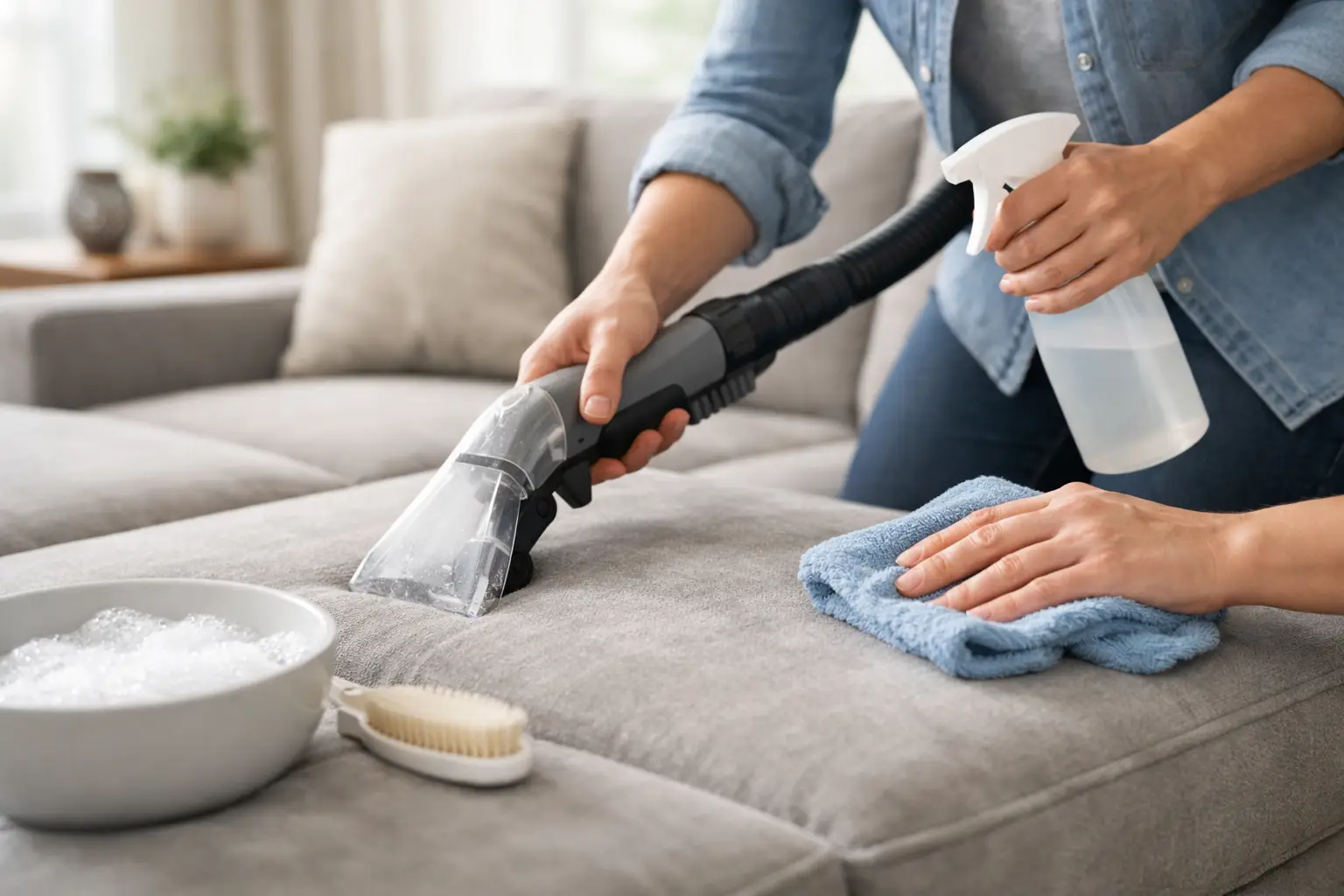
Vacuum the entire sectional using an upholstery attachment. Work slowly across the seat cushions, arms, back cushions, seams, and crevices between sectional pieces. Remove cushions where possible, and vacuum both sides. A soft upholstery brush helps lift embedded pet hair without pulling at the fibers.
After vacuuming, use a clean, dry, soft-bristle brush to gently brush the nap in one direction. Microfiber can develop shaded-looking areas simply because the fibers have been pressed in different directions. Brushing often improves the color and texture before you use any cleaner at all.
How to Clean a Microfiber Sectional With the Right Solution
Once you know the cleaning code, choose the mildest appropriate method. Always work in small sections and avoid soaking the material. Excess moisture can travel through the fabric, create rings, affect cushion foam, and take too long to dry in humid conditions.
For W or WS-Coded Microfiber
Mix a small amount of clear, mild dish soap with distilled water. Distilled water is preferable because minerals in tap water can leave residue or spotting, especially on darker upholstery. You want a lightly sudsy solution, not a bucket of foam.
Dip a clean white microfiber cloth into the solution, then wring it out thoroughly. The cloth should be barely damp, not wet. Gently blot and wipe one small area at a time, moving from the outside edge toward the center. Avoid aggressive scrubbing, which can roughen the fibers and spread a stain.
Follow immediately with a second clean cloth dampened with plain distilled water to remove soap residue. Then blot the area with a dry towel. Let the fabric air-dry completely before deciding whether additional cleaning is needed.
For S or WS-Coded Microfiber
If the label calls for solvent cleaning, use a fabric-safe upholstery solvent according to its directions. Some microfiber fabrics respond well to isopropyl rubbing alcohol, but that is not a universal solution. Test first in an inconspicuous spot, and never mix solvents with other cleaners.
Apply the solvent to a clean white cloth rather than spraying it heavily onto the sectional. Blot the stained area gently, changing to a fresh section of cloth as soil transfers. Keep the application controlled and work in a well-ventilated area, away from flames or heat sources.
Once dry, lightly brush the area with a soft brush to restore the fabric’s texture. A stiff or rough patch usually means residue remains or the nap needs to be reset.
Treat Spills Quickly, But Do Not Panic
Fresh spills are easier to remove than dried stains, but rushing with the wrong product can make the problem worse. When a drink, food, or other liquid lands on the sectional, blot immediately with clean white towels. Press down firmly to absorb moisture, then replace the towel as it becomes damp.
Do not rub the spill back and forth. Rubbing pushes the substance farther into the fibers and can create a larger visible area. Once you have absorbed as much as possible, use the cleaning method that matches the fabric code.
For greasy food or body-oil marks, a water-based cleaning method may not be enough. A solvent-safe fabric may require a proper upholstery solvent, while a water-safe fabric may need a small amount of mild detergent followed by a thorough residue removal. The best choice depends on both the stain and the cleaning code.
Avoid bleach, ammonia, harsh degreasers, and colored cleaning cloths. Bleach can damage fibers and dye, while strong alkaline cleaners can leave microfiber stiff, discolored, or uneven. Colored towels may transfer dye when they become wet.
Prevent Water Rings and Uneven Drying
One of the most common microfiber problems is a ring around the cleaned spot. This happens when soil or cleaner residue moves outward as the fabric dries. Spot cleaning a tiny circle can sometimes leave a larger visible circle behind.
To reduce that risk, clean slightly beyond the stain and feather your work into the surrounding fabric. Use as little moisture as possible, then blot thoroughly. If you are cleaning a large cushion or heavily soiled armrest, it may be better to clean the entire panel evenly rather than chasing individual spots.
Set up airflow with ceiling fans, portable fans, or air conditioning. Do not use a hair dryer on high heat or place cushions in direct hot sun. Fast, gentle airflow is safer than heat, particularly for glued seams, foam, and fabric backing.
Remove Odors Without Masking Them
Odors usually come from what is trapped below the surface: pet accidents, food spills, moisture, body oils, or mildew. Fragrance sprays may cover the smell for a few hours, but they do not remove the source.
For light, dry odors, sprinkle a small amount of baking soda over a fully dry, code-appropriate sectional, let it sit for several hours, and vacuum it thoroughly. Test first, especially on darker fabrics, and make sure all powder is removed from seams and crevices. Baking soda is helpful for mild odor control, but it will not correct contamination deep in the cushion or fabric backing.
If an odor returns after the furniture dries, or if there has been urine, vomit, mildew, or a significant spill, professional upholstery cleaning is the safer choice. These situations often require controlled extraction, odor treatment, and proper drying rather than more household products.
When a Professional Cleaning Is Worth It
Home maintenance is useful for surface soil and small, fresh spots. It is not always the best answer for an entire sectional that looks gray, feels sticky, has repeated stains, or carries lingering odors. Over-cleaning with store-bought products can leave residue that attracts more dirt and makes the fabric soil faster.
Professional upholstery cleaning can be especially worthwhile for large sectionals, delicate materials, rental properties between guests, and furniture with pet-related stains. The process should be matched to the fabric code and construction, with attention to soil removal, stain treatment, rinse quality, and drying time. A restoration-minded cleaning service works to improve the furniture’s appearance and extend its useful life rather than treating replacement as the first option.
Jensen’s Cleaning helps West Hawaii homeowners and property managers care for upholstered furniture with professional methods designed for the material and condition at hand. Fair, honest recommendations matter, particularly when a sectional is a major investment.
Keep Your Sectional Cleaner Between Deep Cleanings
A quick vacuum every week or two makes a noticeable difference, particularly along seams and under cushions. Rotate and fluff removable cushions according to the manufacturer’s instructions, and brush the microfiber nap when it begins to look uneven. Address spills promptly, but give every cleaned area enough time to dry before anyone sits on it.
The goal is not to scrub a microfiber sectional until it looks new every month. It is to remove soil safely, avoid residue and overwetting, and get experienced help when the fabric needs more than a careful spot treatment.