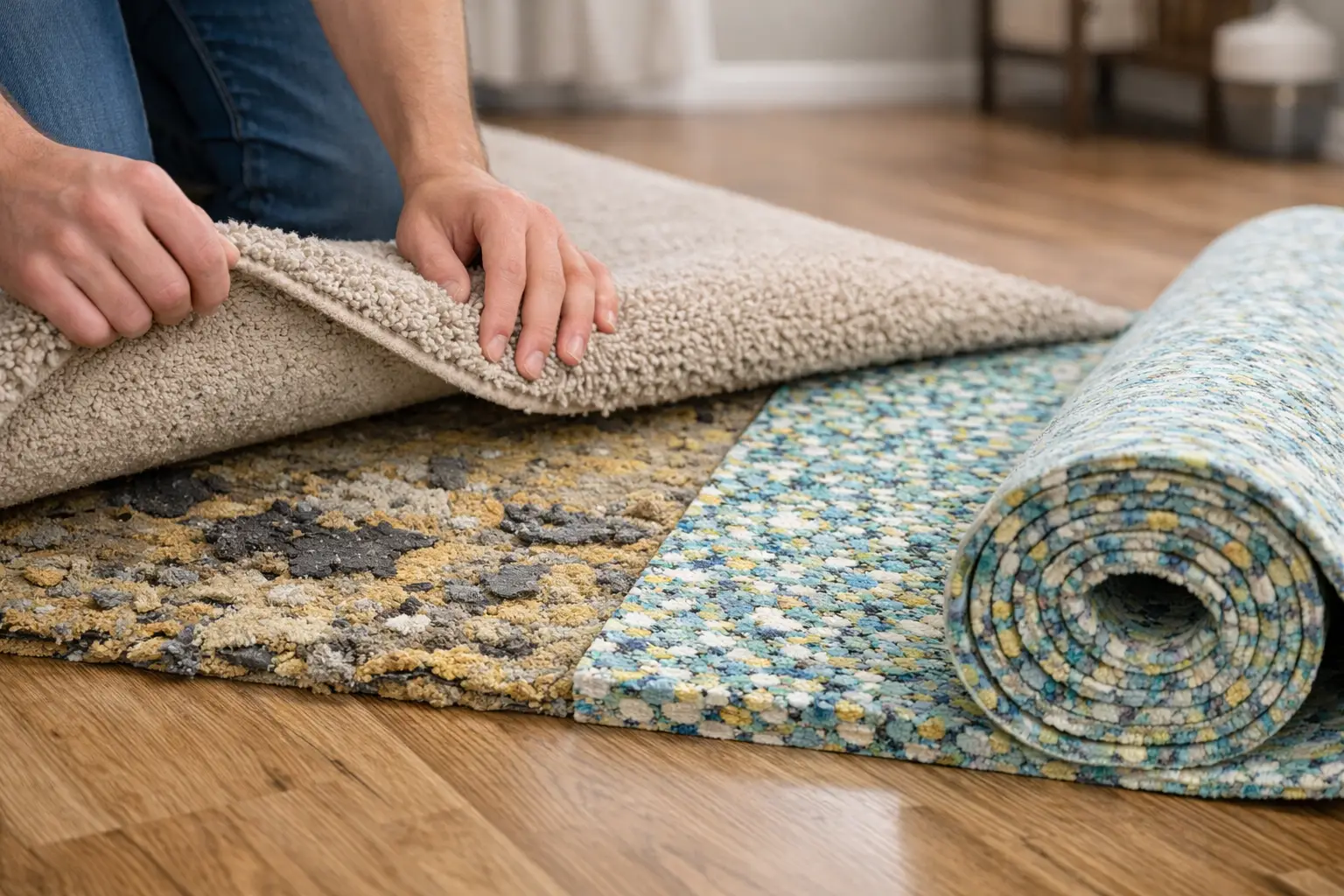
When to Replace Carpet Padding
A carpet can look decent on the surface and still feel wrong underfoot. If it seems flatter than it used to, holds onto odors after cleaning, or feels uneven in certain spots, the issue may not be the carpet itself. Knowing when to replace carpet padding can save you from wasting money on repeated cleanings or replacing carpet sooner than necessary.
Padding does a quiet but important job. It supports the carpet fibers, absorbs impact from foot traffic, helps the room feel more comfortable, and can even affect how well the carpet wears over time. When the pad breaks down, the carpet above it usually follows.
When to replace carpet padding: the clearest signs
The most obvious sign is a carpet that feels crushed or thin even after a professional cleaning. Dirt and residue can make carpet look tired, but cleaning cannot rebuild a pad that has lost its structure. If the floor feels hard, uneven, or spongy in patches, the padding may be worn out, compressed, or damaged below the surface.
Persistent odor is another strong clue. Padding can trap pet urine, moisture, mildew, and years of spill residue. In some cases, the carpet fibers can be cleaned successfully while the pad underneath continues to hold the smell. If odors return quickly after cleaning, especially in the same area, the padding may need to be replaced.
Wrinkling, rippling, or loose carpet can also point to pad failure. Sometimes the problem is installation-related, but older padding that has shifted, crumbled, or compressed unevenly can contribute to a carpet that no longer sits properly.
Stains that keep resurfacing are worth paying attention to as well. A spill that soaked through to the pad can wick back up into the carpet over time. This is common with pet accidents, drink spills, and moisture exposure. If the same spot keeps reappearing, the issue may be deeper than the carpet pile.
How long carpet padding usually lasts
In many homes, carpet padding lasts around 8 to 10 years. That is a useful baseline, but it is not a rule. Some pads wear out much sooner, especially in high-traffic areas like hallways, stairs, living rooms, and rental properties. Other areas, such as guest rooms, may stay in decent shape longer.
The lifespan depends on the type and quality of the pad, the weight of the carpet, the amount of foot traffic, and whether there have been spills, pet accidents, or moisture problems. In West Hawaii, humidity and tracked-in sand can add to the wear. Even a well-maintained carpet system will age faster if it deals with moisture or abrasive debris on a regular basis.
That is why age alone should not decide it. A ten-year-old pad in a low-use room may still have life left in it, while a five-year-old pad in a busy family room may already be spent.
What damaged padding feels and smells like
Homeowners often expect damaged padding to look dramatic, but the first clue is usually something you notice with your feet or your nose. The carpet may feel firm in one section and soft in another. You may hear a slight crunching sound underfoot if the pad has become brittle or started to break apart. In some cases, the carpet develops a hollow or squishy feel where moisture has affected the material below.
Odor is just as telling. Musty smells suggest moisture or mildew. Sour or sharp smells often point to spills that reached the pad. Pet urine is especially difficult because once it saturates the padding, surface cleaning alone may not solve the problem for long.
If you pull back a corner during a flooring inspection, damaged padding may appear stained, crumbly, matted, or discolored. A healthy pad should still have some resilience and a more consistent texture.
Can you replace carpet padding without replacing the carpet?
Sometimes, yes. If the carpet itself is still in good condition and the issue is isolated to the pad, replacing the padding can be a smart restoration move. This works best when the carpet has enough life left, the backing is intact, and there is no widespread damage from stretching, delamination, or severe staining.
Spot replacement is also possible in some situations. If a pet accident or leak affected one section, a professional may be able to replace the pad in that area and treat the carpet accordingly. The success of that approach depends on how far the damage spread and whether the carpet can be reinstalled cleanly.
There are limits. If both the carpet and pad are near the end of their life, replacing only the pad may not make financial sense. The labor involved in lifting and resetting carpet can be worth it when the carpet is still sound, but less so when the surface material is already heavily worn.
When cleaning is enough and when it is not
Professional cleaning can do a lot. It removes deep soil, improves appearance, reduces odors, and helps preserve the carpet. But cleaning is not a fix for structural breakdown underneath.
If the main problem is embedded dirt, traffic lanes, or dull-looking fibers, a thorough cleaning may restore the carpet nicely. If the problem is ongoing odor, recurring stains, uneven softness, or clear compression that never rebounds, the pad may be the real issue.
This is where an honest assessment matters. A restoration-minded company should not push replacement if a deep cleaning will do the job. On the other hand, it does not help to clean the same carpet repeatedly when the underlying padding is no longer supporting it.
Situations that call for faster replacement
Certain conditions move padding replacement higher on the priority list. Water intrusion is one of them. A plumbing leak, appliance overflow, or storm-related moisture can saturate the pad quickly. Even if the carpet surface dries, the pad can stay damp long enough to develop mildew or odor.
Pet damage is another. Repeated accidents rarely stay confined to the carpet fibers. Once urine reaches the pad and subfloor, treatment becomes more involved. In some cases, cleaning and odor treatment are enough. In others, replacing the affected padding is the more reliable solution.
Heavy commercial or vacation rental traffic can also shorten padding life. More foot traffic means more compression, more grit worked into the carpet base, and more wear at seams and transitions. Property managers often notice that the carpet still looks acceptable from a distance, but guests feel the wear immediately.
Choosing new padding the right way
If you do replace the pad, it is worth choosing the right one for the room instead of simply matching what was there before. Thicker is not always better. The carpet manufacturer’s recommendations matter because the wrong density or thickness can affect performance and warranty coverage.
For high-traffic spaces, a denser pad often performs better than an overly soft one. In homes with pets or moisture concerns, a moisture-resistant option may make sense. In quieter rooms, comfort may be a bigger priority.
This is also a good time to think long term. A quality pad helps carpet wear better, feel better, and stay more stable under daily use. It is not the flashy part of the flooring system, but it often makes the difference between carpet that ages well and carpet that breaks down early.
Should you replace carpet padding when installing new carpet?
In most cases, yes. Reusing old padding under new carpet is rarely a good bargain. Even if the old pad looks passable, it has already absorbed years of pressure, soil, and wear. New carpet installed over tired padding can lose that fresh, supportive feel much sooner.
There are exceptions, but they are limited. If the padding is relatively new, high quality, and confirmed to be clean and structurally sound, reuse may be possible. Still, most homeowners get better value from starting fresh. It protects the investment and gives the new carpet the support it was designed to have.
If you are unsure, a professional inspection can help separate what can be restored from what should be replaced. Companies like Jensen’s Cleaning see this regularly in homes and properties where the goal is not unnecessary replacement, but getting the longest useful life out of the flooring.
Padding problems are easy to miss because they sit out of sight, but they show up in comfort, odor, and wear every day. If your carpet feels wrong no matter how clean it looks, trust that signal and have the full system checked before the damage spreads.