A Luxury Vinyl Floor Maintenance Schedule That Works
A beautiful luxury vinyl floor can start looking tired long before its time when fine sand, damp feet, sunscreen residue, and everyday traffic are allowed to build up. A practical luxury vinyl floor maintenance schedule prevents that slow wear without turning floor care into a full-time job. The goal is simple: remove abrasive debris early, clean residue before it dulls the finish, and get professional help before small issues become permanent-looking damage.
For homes, vacation rentals, and businesses in West Hawaii, the schedule may need to be more frequent than it would in a low-traffic mainland home. Our dry climate, beach sand, open doors, pets, and humid areas around kitchens and entries all put extra pressure on vinyl flooring. The right routine protects both the appearance of the floor and the investment underneath it.
Start With Your Floor’s Specific Care Instructions
Luxury vinyl plank and luxury vinyl tile are durable, but they are not all made the same way. Wear-layer thickness, surface texture, installation method, and manufacturer warranty requirements can affect which products are safe to use. Before choosing a cleaner or polish, check the flooring manufacturer’s guidance.
In most cases, a pH-neutral cleaner made for luxury vinyl is the safest choice. Avoid harsh degreasers, abrasive powders, waxes, oil soaps, steam mops, and cleaners that leave a heavy shine behind. These products can leave residue, create a slippery surface, or interfere with the floor’s factory finish. A cleaner that works well on ceramic tile or natural stone is not automatically right for vinyl.
A little moisture is fine during routine cleaning, but standing water is not. Pay special attention to seams, transitions, and edges near exterior doors, bathrooms, and kitchen appliances. If water gets below a floating vinyl floor, it can contribute to odors, movement, or damage to the subfloor.
Your Luxury Vinyl Floor Maintenance Schedule
The best schedule depends on traffic. A quiet guest room needs far less attention than a busy family room, a vacation rental entry, or a commercial space. Use this as a practical baseline, then increase the frequency in areas that collect visible grit or moisture.
Daily or as Needed: Remove Sand, Dirt, and Spills
Dry debris is one of the biggest threats to a vinyl floor’s finish. Fine grit can act like sandpaper under shoes, chair legs, and rolling luggage. Sweep with a soft broom, use a dry microfiber dust mop, or vacuum with the beater bar turned off. If your vacuum cannot disable the rotating brush, use a hard-floor attachment instead.
Wipe spills promptly with a soft cloth and clean water, then dry the area. This matters especially with cooking oil, pet accidents, beverage spills, sunscreen, and tracked-in mud. The longer residue stays on the surface, the more likely it is to leave a dull patch or attract more dirt.
At entryways, a quick daily pass is often worth the effort. A good mat outside the door and another just inside can capture a surprising amount of sand before it reaches the floor.
Weekly: Damp Mop High-Traffic Areas
Once a week, damp mop the areas that see regular activity. For many homes, that means the kitchen, hallways, living room, bathrooms, and entry. Vacation rentals and businesses may need this step several times a week, especially during busy guest turnover periods.
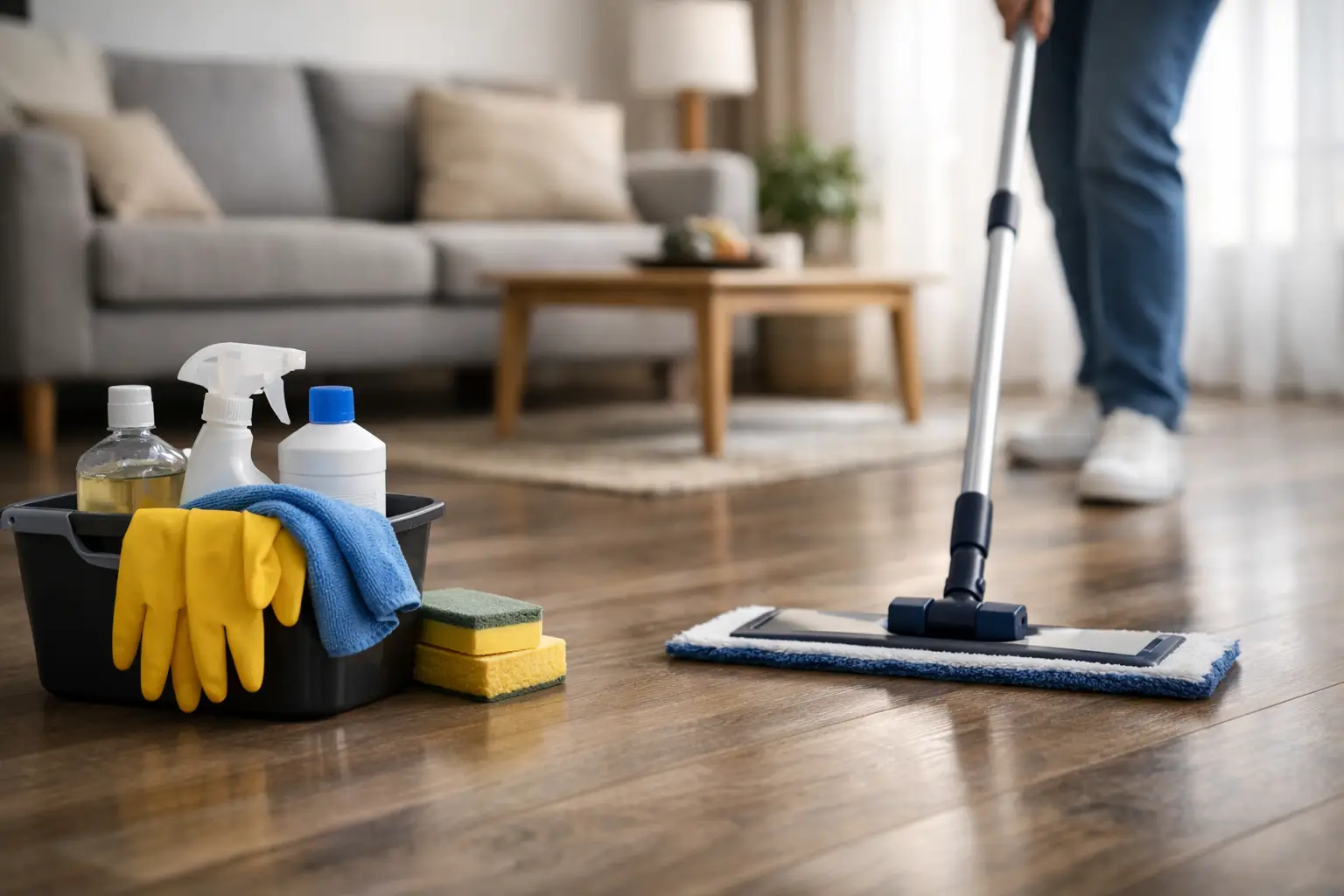
Use a clean microfiber mop with a well-wrung pad. The mop should be damp, not dripping. Apply a manufacturer-approved or pH-neutral vinyl floor cleaner according to its dilution directions. Using too much product is a common mistake. Extra cleaner does not create a deeper clean. It often leaves a film that makes the floor look hazy and causes dirt to stick faster.
Change mop pads or rinse them thoroughly as they become dirty. Mopping with a loaded pad simply moves grime from one section of the floor to another.
Monthly: Check Trouble Spots and Build-Up
Set aside a few minutes each month to inspect the areas that take the most abuse. Look near kitchen ranges, dining areas, exterior doors, pet feeding stations, office chairs, and bathroom vanities. These spots can develop sticky residue, scuffing, or a dull appearance before the rest of the floor does.
Clean localized marks with a soft cloth and a vinyl-safe cleaner. For scuffs, gentle rubbing with a microfiber cloth may be enough. Do not reach for steel wool, abrasive scrub pads, or strong solvents. They can damage the protective layer and make the area more likely to hold dirt in the future.
This is also a good time to shake out or wash entry mats, clean furniture glides, and check that floor protectors are still in place. Felt pads under chairs and furniture legs help prevent scratches, but dirty or worn pads can become abrasive themselves.
Every 3 to 6 Months: Deep Clean the Whole Floor
Routine mopping handles surface soil, but it may not fully remove the body oils, cooking residue, cleaning-product film, and embedded dirt that collect over time. Plan a more detailed deep cleaning every three to six months. A busy rental, restaurant-adjacent space, or active household with pets may need it closer to every three months. A lightly used room may go longer.
The key is to deep clean without overwetting the floor or applying products that leave a coating. Work in manageable sections, use clean pads, and dry the surface promptly. If the floor still looks cloudy after proper cleaning, the issue may be residue rather than permanent wear. In other cases, the finish may have been affected by an incompatible product, heavy abrasion, or prolonged moisture.
Annually: Assess Condition and Protect Problem Areas
Once a year, take a closer look at the floor in good natural light. Notice whether traffic lanes are becoming dull, whether joints are opening, or whether discoloration appears near windows, appliances, or exterior thresholds. Moving furniture carefully and cleaning beneath it can also reveal hidden grime and moisture issues.
An annual review is especially useful for property managers and vacation rental owners. Floors often receive much harder use than expected, and guest turnover can hide slow changes until they become obvious. Addressing buildup, stains, or moisture concerns early can help extend the useful life of the floor and keep the property looking well cared for.
Protect the Floor Between Cleanings
Cleaning works best when it is paired with simple prevention. Keep mats at entrances, but choose non-staining mats without rubber or latex backings that can discolor certain vinyl products. Use breathable rug pads that are approved for vinyl flooring, and avoid leaving wet towels, planters, or pool gear directly on the floor.
Furniture protection matters, too. Use wide, non-staining floor protectors under heavy furniture and rolling chairs. When moving furniture, lift it rather than dragging it. In sunny areas, use blinds or window coverings when practical, since intense UV exposure can fade some flooring over time.
For beach homes and properties near heavily traveled outdoor areas, make shoe removal or sand cleanup easy. A small bench, a basket for sandals, and a handheld vacuum near the entry can do more for the floor than an occasional aggressive cleaning session.
When Routine Cleaning Is Not Enough
A floor that stays sticky, cloudy, or dull after careful cleaning may need more than another pass with a mop. The same is true for dark traffic lanes, recurring odors near seams, visible residue, or stains that keep returning. These signs can point to product buildup, trapped soil, moisture concerns, or a cleaning method that is not suited to the flooring.
Professional vinyl floor cleaning is a sensible option when the floor needs a thorough reset but you do not want to risk damaging its finish. A qualified cleaner can assess the surface, identify likely causes of discoloration or haze, and use methods appropriate for the material. This is often a better first step than assuming the floor needs replacement.
Jensen’s Cleaning helps West Hawaii homeowners, property managers, and businesses restore the clean, cared-for appearance of vinyl floors with fair, honest service and a focus on protecting the surface. If your floor has reached the point where routine maintenance is no longer getting results, a professional assessment can help you choose the right next step.
A consistent schedule does not need to be complicated. Keep grit off the floor, use gentle products, deal with spills quickly, and give high-traffic areas the attention they earn. Those small habits keep luxury vinyl looking like the durable, attractive floor you chose in the first place.