Restaurant Floor Restoration That Protects Your Business
A dining room can have spotless tables, great lighting, and a well-trained staff, but a stained grout line or dull, greasy floor still changes what guests notice. Restaurant floor restoration addresses the wear that routine mopping cannot reach, helping food-service spaces look cared for while protecting the surfaces that work hard every day.
For restaurant owners and property managers, this is not simply a cosmetic service. Floors affect first impressions, daily cleaning time, staff footing, and the useful life of tile, stone, vinyl, and other commercial flooring. The right approach depends on the material, the type of buildup, and how the space operates from opening prep through closing cleanup.
Why Restaurant Floors Wear Out Faster
Restaurant floors face a combination of challenges that most homes never see. Cooking oils travel farther than many owners expect. They collect near kitchen doors, service paths, host stands, beverage stations, and restroom entrances. Food spills, drink sugars, tracked-in grit, cleaning residue, and repeated foot traffic gradually leave a surface looking dark or uneven.
In West Hawaii, fine outdoor dust, moisture, and busy indoor-outdoor traffic can add to the problem. A floor may be cleaned every night and still develop a dull film because mopping often moves residue around instead of removing it fully. Over time, that film can hold soil more tightly and make a once-easy floor harder to maintain.
Grout is especially vulnerable. Its porous surface can absorb grease, spills, and discoloration, creating dark lines that make an otherwise clean dining area look neglected. Natural stone can also lose its clarity or finish when it is treated with the wrong products. Vinyl floors may show scuffs, embedded soil, or worn protective coatings in high-traffic lanes.
What Restaurant Floor Restoration Actually Involves
Professional restoration begins with identifying the floor, not choosing a one-size-fits-all cleaner. Ceramic or porcelain tile, natural stone, luxury vinyl, sheet vinyl, sealed concrete, and commercial carpet each require different equipment, products, and moisture control. Using a strong degreaser on the wrong material can create damage that is far more expensive than the original cleaning problem.
A qualified technician first evaluates the floor’s condition. This includes looking for embedded soil, grout discoloration, sticky residue, worn finish, mineral deposits, stains, loose tile, cracked grout, or signs that an old coating is failing. The inspection also considers the restaurant’s schedule, because cleaning methods need to fit around food service and allow appropriate drying time before guests and employees return.
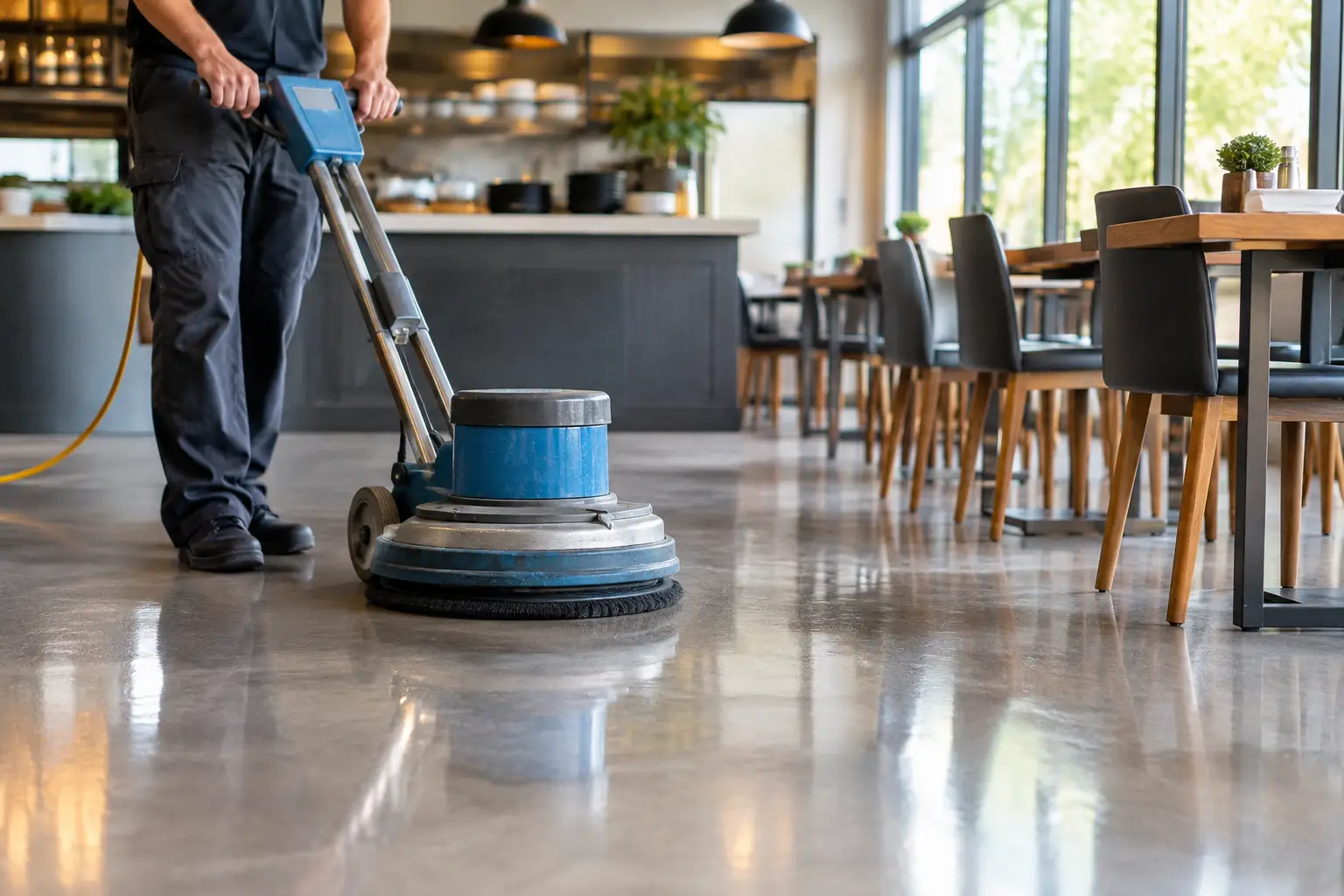
For tile and grout, the process often involves targeted pre-treatment, agitation, and high-powered extraction to lift soil from textured surfaces and grout lines. The goal is to remove buildup rather than cover it up. If grout is clean but still porous, sealing may be worth considering to make future spills and routine maintenance more manageable.
Vinyl flooring may need deep cleaning to remove residue and ground-in dirt. In some cases, the finish itself needs attention. A restoration-minded service can determine whether the floor can be renewed through cleaning and protective treatment or whether the wear is too advanced for a cleaning-only solution. That honest distinction helps owners avoid paying for work that will not deliver a lasting result.
Natural stone requires particular care. Stone can be sensitive to acidic products, aggressive scrubbing, and incorrect sealing. Restoration may involve specialized cleaning, stain treatment, polishing, or resealing depending on the stone and its existing finish. The best result is not always the shiniest result. In a busy restaurant, the appropriate finish should balance appearance, traction, and practical maintenance.
The Business Case for Restoring Instead of Replacing
Replacing restaurant flooring can mean downtime, disruption, material costs, and a difficult scheduling problem. Restoration is often the smarter first step when the underlying floor is sound. Deep cleaning and proper surface care can bring back color, improve uniformity, and extend the usable life of a floor that appears ready for replacement at first glance.
That does not mean every floor can be saved. Cracked tile, failing subflooring, widespread water damage, or severely worn material may call for repair or replacement. But many floors that look permanently dirty are dealing with years of buildup, old coatings, or neglected grout. A professional assessment gives owners a realistic path forward instead of a rushed replacement decision.
Restoration can also support day-to-day operations. When surface residue is removed, regular mopping is more effective and less frustrating for staff. Clean grout lines make inspections and spot cleaning easier. A floor that looks consistently cared for reinforces the same standard guests expect from the kitchen, restrooms, and dining room.
When to Schedule Restaurant Floor Restoration
The best time is before the floor becomes a visible problem for guests or a daily headache for staff. Many restaurants benefit from scheduled professional service based on traffic levels, floor material, kitchen activity, and the effectiveness of their in-house cleaning routine.
A high-volume restaurant with heavy kitchen-to-dining-room traffic may need periodic deep cleaning several times a year. A smaller café or dining room with protected flooring may need less frequent restoration but still benefit from a regular evaluation. There is no responsible universal schedule, because a polished stone entryway, a vinyl service corridor, and a tiled restroom all wear differently.
Pay attention when floors stay sticky after mopping, grout looks darker than it used to, or the floor has uneven shine and visible traffic lanes. Persistent odors near flooring, recurring stains, or residue that returns quickly can also indicate that surface-level cleaning is no longer enough.
Protecting Results Between Professional Visits
Professional work lasts longer when staff have a clear, material-appropriate maintenance routine. Use entrance mats where they will capture grit without becoming a trip hazard, and clean them regularly. Address food and drink spills promptly rather than allowing sugar, grease, or acids to sit on the surface.
Avoid assuming that more chemical equals a cleaner floor. Overusing cleaning products can leave a film that attracts dirt, dulls the finish, and complicates future restoration. Use the correct dilution, change mop water frequently, and make sure the mop itself is clean. A dirty mop can redeposit grease and soil across the floor.
For floors with stone, specialty finishes, or aging vinyl, keep product selection simple and approved for that material. Harsh acids, abrasive pads, and improvised cleaners may create immediate shine or remove a spot, but they can also etch stone, damage coatings, or weaken grout. When in doubt, ask the restoration professional what products and tools are appropriate for your specific surface.
Choosing a Floor Care Partner for a Restaurant
Restaurants need more than a quick pass with a machine. Look for a provider that understands different floor materials, can explain the recommended method in plain language, and is willing to be direct about what results are realistic. The lowest quote is not always the lowest cost if improper work leads to damaged stone, stripped finishes, or an early replacement project.
A dependable company should also respect your operating hours, provide clear pricing, and use professional equipment suited to commercial buildup. Ask how the team handles drying time, safety around newly cleaned surfaces, and any areas that need special attention. For West Hawaii businesses, Jensen’s Cleaning brings a restoration-focused approach to tile, grout, stone, and vinyl care, with the goal of renewing surfaces when renewal is the practical choice.
A clean floor should not be the part of your restaurant guests remember. With the right restoration plan and steady maintenance afterward, it can simply support the experience you have worked hard to create – welcoming, well-kept, and ready for another busy service.