How to Revive Dull Vinyl Floors Safely at Home
Fine red dirt at the entry, sandy feet after a beach day, cooking residue, and humid air can all leave vinyl looking tired sooner than expected. Knowing how to revive dull vinyl floors starts with one key point: dullness is not always permanent wear. Often, it is a layer of soil, cleaner residue, or scuffing standing between you and the floor’s original finish.
Vinyl is durable, but it is not indestructible. The wrong product, too much water, or aggressive scrubbing can make a temporary appearance problem much worse. A careful cleaning routine can bring back a clean, even look. When the finish itself has worn away, professional restoration advice may be the more honest and cost-effective answer.
Start by identifying why the vinyl looks dull
Before applying a shine product, look closely at the floor in natural light. A gray or cloudy film that appears across a large area usually points to residue or embedded soil. This is common when a floor is cleaned repeatedly with products that leave behind soaps, waxes, oils, or “shine” additives.
A dull path through a kitchen, hallway, office, or vacation rental may be traffic wear. Tiny scratches and scuffs scatter light instead of reflecting it evenly, so the surface appears faded. Near exterior doors, grit can act like fine sandpaper under shoes and furniture feet.
There is also a difference between a vinyl floor that needs cleaning and one that has physical damage. If the surface is peeling, deeply gouged, cracked, curling at the seams, or discolored beneath the wear layer, cleaning will not restore it. That does not automatically mean replacement is necessary, but it does mean a glossy cleaner is unlikely to solve the problem.
How to revive dull vinyl floors without damaging them
The safest approach is to remove dry soil first, then wash away the film that ordinary mopping leaves behind. Work in a small test area before treating an entire room, especially if the floor is older or you do not know its exact product type.
Remove loose grit before mopping
Sweep with a soft broom or vacuum using a hard-floor setting. Avoid a beater bar, which can scratch or scuff some vinyl surfaces. Pay special attention to wall edges, under tables, and entryways, where fine dirt tends to collect.
This step matters more than it sounds. Mopping over gritty debris can push it across the surface and create additional dull-looking scratches. In West Hawaii homes and businesses, regular dry soil removal is especially useful because sand and volcanic dust can travel in quickly.
Use a pH-neutral vinyl floor cleaner
Choose a cleaner specifically labeled for vinyl, luxury vinyl plank, or resilient flooring. Follow the dilution instructions exactly. More cleaner does not produce a cleaner floor. It often produces a sticky film that attracts dirt and makes the floor look hazy again within days.
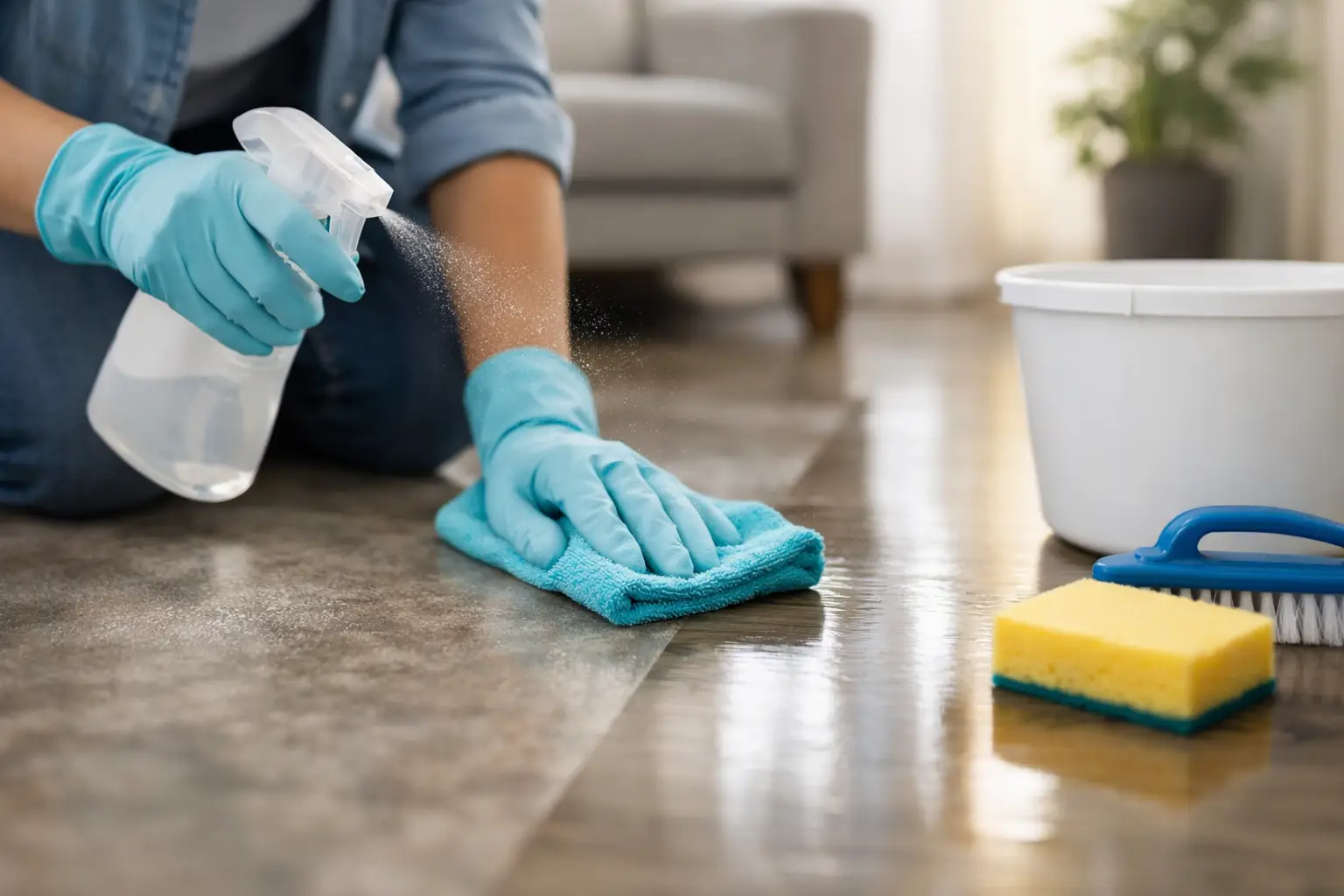
Apply the solution with a microfiber mop that is damp, not dripping. Excess water can work into seams, edges, and loose sections of flooring. Clean one manageable area at a time, rinsing or changing the mop pad as it becomes dirty.
If you prefer a simple maintenance option, warm water with a very small amount of pH-neutral cleaner is usually enough for routine care. Avoid using vinegar as a catch-all solution. While it is commonly recommended online, repeated acidic cleaning can be a poor match for certain vinyl finishes and manufacturer warranties. It may also fail to remove the residue causing the dullness.
Rinse away cleaner film when needed
If the floor still feels tacky, looks cloudy, or shows streaks after cleaning, residue is likely the problem. Go over the area again with a fresh microfiber pad lightly dampened with clean water. Then dry buff the surface with a clean towel or dry microfiber mop.
Drying is not just for appearance. It helps prevent water spots and allows you to see whether the floor is actually clean before adding another product. If the dullness improves significantly after this step, skip any shine restorer. The floor may only need a better maintenance routine.
Treat scuffs carefully
Black heel marks and light surface scuffs can make a clean floor look neglected. Start gently with a damp microfiber cloth and vinyl-safe cleaner. For stubborn rubber marks, a small amount of an approved scuff remover may help, but test it in an inconspicuous location first.
Do not use steel wool, abrasive scrub pads, powdered cleansers, or stiff brushes. These can create permanent micro-scratches that make the floor look more dull, not less. Magic-eraser-style sponges can also be too abrasive for some vinyl finishes, particularly when used with pressure.
Be cautious with floor polish and “shine” products
A floor polish can improve the look of some vinyl floors, but it is not the first step for every dull surface. Many modern luxury vinyl floors have factory-applied protective coatings and are not designed for wax or polish. Applying the wrong finish can leave uneven shine, visible buildup, slippery patches, or a coating that later needs professional stripping.
Check the flooring manufacturer’s care instructions if they are available. If the floor is approved for a restorer or finish, make sure it is made for that specific type of vinyl. The floor must also be completely clean and free of residue before application. A shine product applied over dirt merely seals the problem in.
Traditional sheet vinyl, older commercial vinyl, and certain resilient floors may benefit from a compatible finish after a deep clean. Luxury vinyl plank and luxury vinyl tile often need careful cleaning rather than added wax. It depends on the floor construction, its protective layer, and the source of the dullness.
Avoid the shortcuts that cause bigger problems
Some cleaning methods seem effective at first because they create a wet sheen or remove soil quickly. The trade-off can be damaged vinyl, loosened adhesive, and a floor that becomes harder to maintain.
Avoid these common mistakes:
- Steam mops, which can force heat and moisture into seams or weaken adhesive on some vinyl floors.
- Bleach, ammonia, and strong degreasers, which can discolor or dull the protective layer.
- Oil soaps and furniture polish, which leave slippery residue and attract dirt.
- Excess water, especially around seams, baseboards, and damaged edges.
- Wax meant for hardwood floors, which can build up and create an uneven, artificial shine.
For kitchens, bathrooms, and commercial spaces, use the least aggressive product that will do the job. That approach protects both the floor’s appearance and its service life.
Keep revived vinyl looking better longer
Once the floor is clean, prevention makes the biggest difference. Place quality mats at exterior doors and clean them often so they capture sand and dust instead of transferring it indoors. Use felt pads under chair legs, tables, and movable furniture, replacing them when they collect grit.
Sweep or dry mop high-traffic areas several times a week, then damp mop as needed rather than on a fixed schedule. A vacation property with frequent guest turnover may need more attention at entrances and kitchens than a lightly used home. A busy office, retail area, or hospitality space may benefit from a scheduled professional deep cleaning before soil becomes embedded.
Address spills promptly, especially oily foods, sunscreen, pet accidents, and tracked-in mud. These can leave a film that changes the floor’s color and traction even after the visible spill is gone. Use a clean cloth, a vinyl-safe cleaner, and minimal moisture.
When professional vinyl floor cleaning makes sense
If you have mopped repeatedly but the floor still looks dark, cloudy, or uneven, the issue may be years of buildup rather than ordinary dirt. Professional cleaning can be particularly helpful for large areas, textured vinyl, commercial flooring, rental properties, and floors with stubborn residue around traffic lanes.
A trained floor care team can assess whether the surface needs deep cleaning, residue removal, compatible finish work, or a realistic conversation about damage. At Jensen’s Cleaning, the goal is to restore what can be restored without overselling a solution that does not fit the floor.
A dull vinyl floor does not always need replacement. Start with gentle, targeted cleaning and give the surface a chance to show its true condition. If the finish still looks uneven after careful care, a professional assessment can help you protect the flooring you already own and make a practical next decision.